
Featured chamber · BH3000B
Chili and red pepper heat-pump drying for color and moisture discipline
Dried chili sells on color, cleanliness, and a moisture band a buyer will accept — not on slogan tonnage.
Open sun and poorly controlled hot air can fade carotenoid color, scorch the surface while the core stays wet, and leave a hygiene story that is hard to take to an export carton. A closed-loop heat-pump chamber dehumidifies by condensation and reheats the same air, so relative humidity can finish the load — you do not have to keep raising the heat.
What buyers actually reject
Pain points in dried chili
A buyer who opens a carton of dull, browned, or mold-risky pods will not care that the dryer was “big.” These are the problems spice and seasoning plants usually need to work on first.
Color fade and scorch
Red–orange chili color is largely carried by carotenoids. Excess heat, light, and long open holds all stress that color. Aggressive early heat can toast the edges while the inside is still wet.
Case hardening
A dry surface with a wet core often follows aggressive early heat and poor humidity control. Moisture may equalize later — or storage risk appears. Surface color alone is a poor dryness test.
Uneven loading and wet pockets
Hollow pods nest and block air; flake beds can mat. Overloading trays is a common reason for uneven color and wet pockets. Loading should be confirmed on your trays and cut — not copied from another crop.
Moisture language that misses the COA
One trader says “10%,” another cites a type-specific table, and a powder line needs a different conversation than whole pods. There is no single global number. Lock the band and the lab method on the destination buyer COA.
Open-sun cleanliness
Yard drying is exposed to dust, insects, and unmanaged weather. An enclosed chamber supports a cleaner hygiene narrative for export — it is not a substitute for plant sanitation and packing discipline.
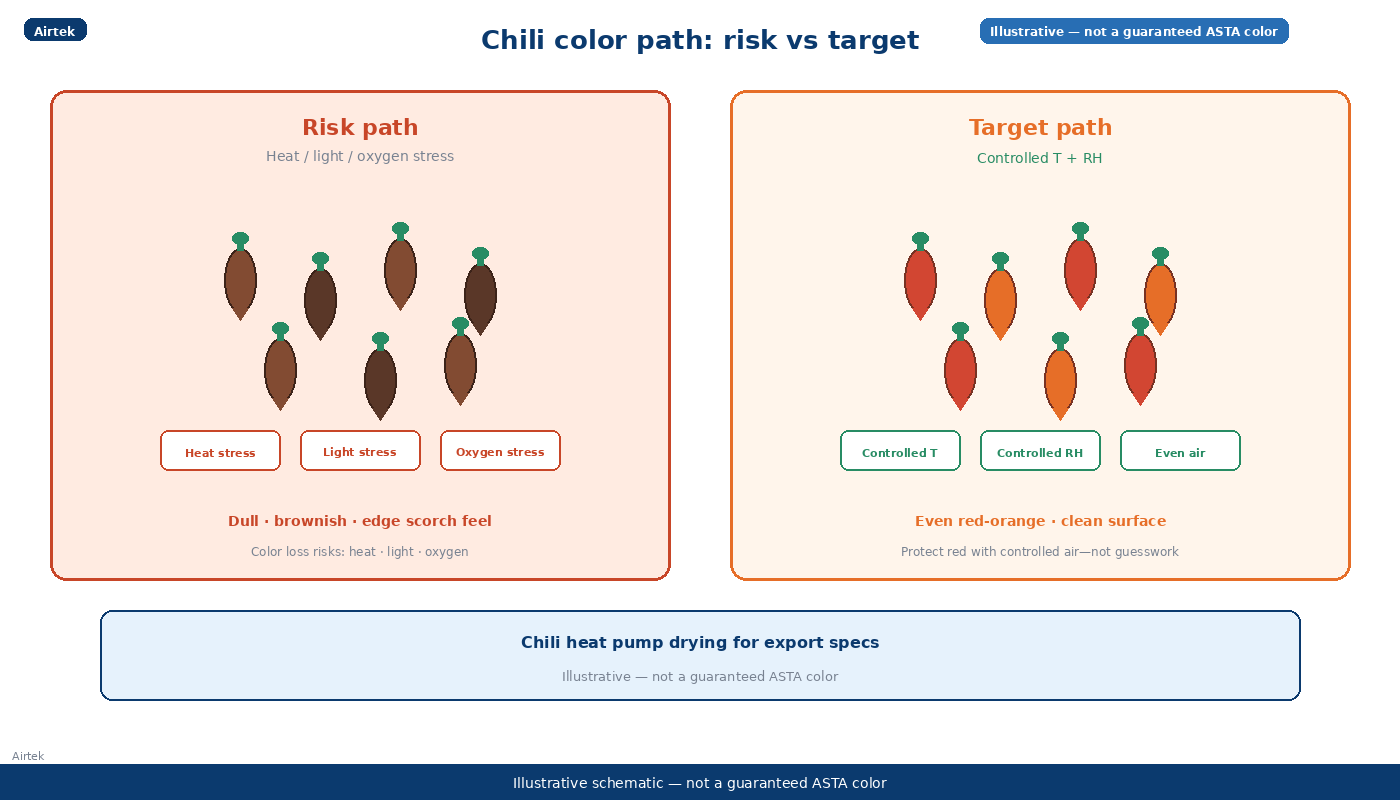
Illustrative schematic — not a guaranteed ASTA color value. Protect red–orange color with controlled air; confirm the result with your material and the buyer’s method.
Closed-loop control
What a heat-pump dryer changes
A chili heat-pump dryer conditions circulating air in a closed loop: water is taken out by condensation, and the air is reheated back to the product. That gives you humidity as a process lever, not only more heat.
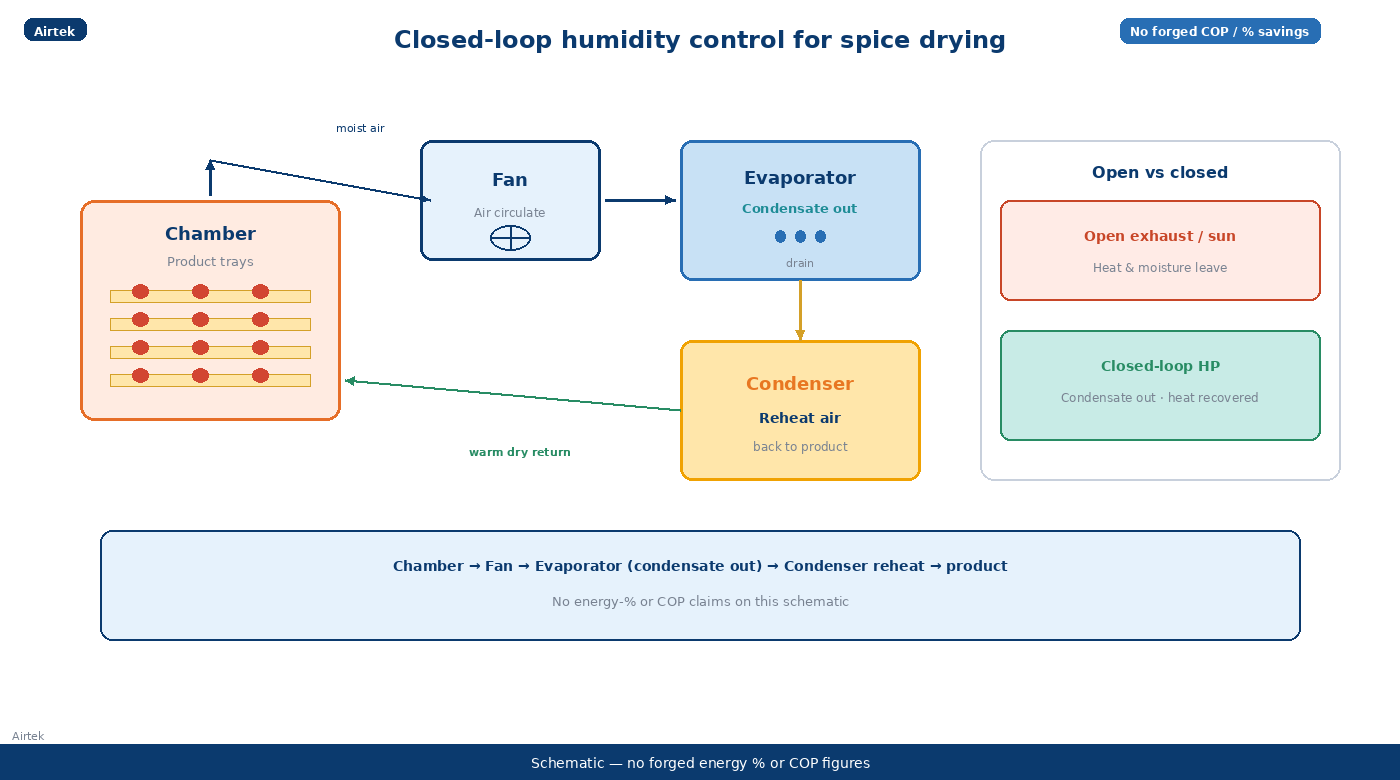
Chamber → fan → evaporator (condensate out) → condenser reheat → product. Schematic only; this page does not print an energy-saving percentage or a COP figure.
Dehumidify, then reheat
Water leaves the loop as condensate, not as a plume of exhaust you have to throw away. Warmed, drier air returns to the trays, inside an enclosed chamber.
Relative humidity as a finishing lever
Late in the cycle you can keep driving moisture out with drier air, instead of defaulting to scorched temperatures. Setpoints are confirmed in trials with your material.
A more controlled color path
An indoor, weather-independent loop lets you stage temperature and humidity. That supports carotenoid color and cleanliness better than open sun — without a color value promised from the dryer brand alone.
Energy in engineering units
Talk about energy as kWh per kilogram of water removed, under stated assumptions. This page does not invent a chili-specific energy-saving percentage. See heat-pump versus hot-air energy.
Whole, flake, or powder
Match the dryer conversation to the product form
Whole pods, flakes or rings, and a powder pathway do not ask the same things of airflow, bed depth, or sampling. Share the form you actually run — not a generic “chili” label — when you inquire.
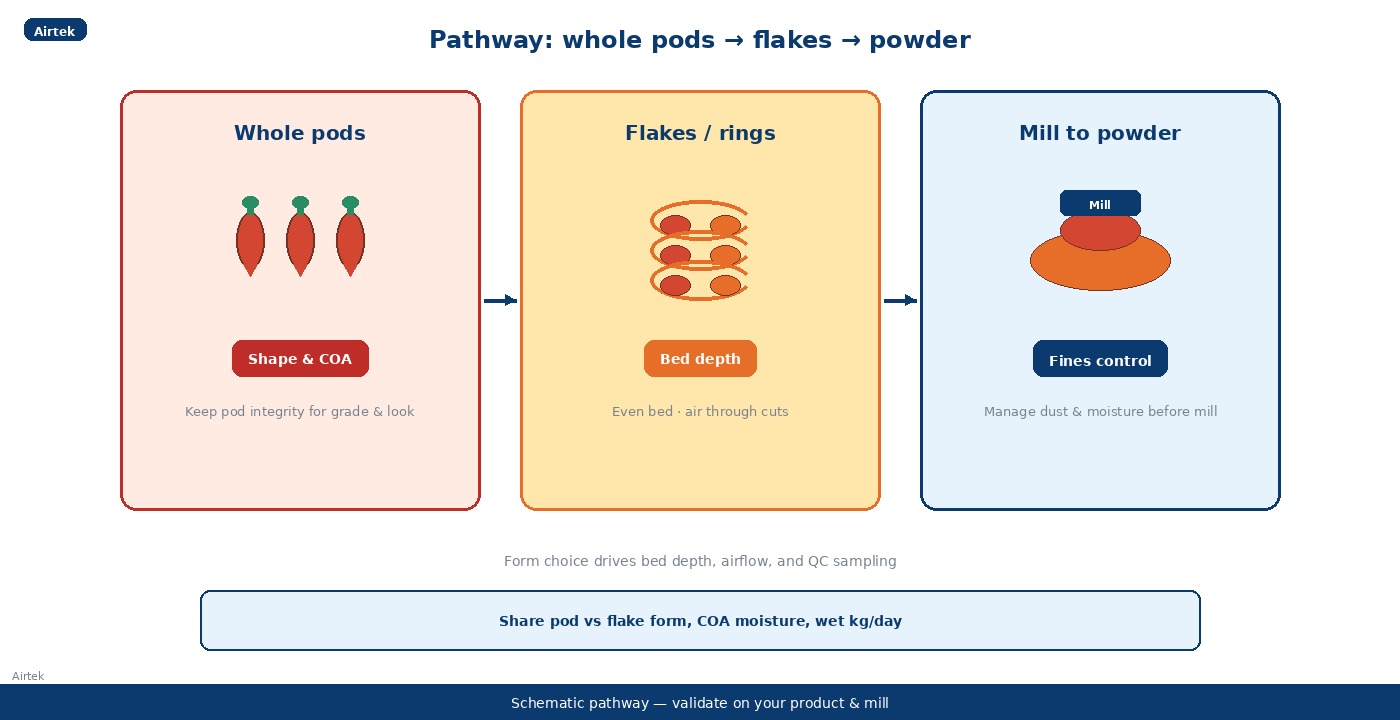
Form choice drives bed depth, airflow, and QC sampling. Schematic only — validate on your product and mill.
Whole pods
Shape, visual color, and even moisture matter for export or retail grade. Handle the pods carefully; hollow fruit needs air lanes so thick shoulders do not stay wet. Irregular pods and frequent SKU changes often favor a batch tray chamber.
Flakes and rings
Cuts shorten the water path, so bed depth and fines matter more. Keep the bed open so air can move through the pieces, and be ready for a different moisture band and sampling plan than whole pods.
Powder pathway
Pieces are usually dried to a millable moisture, then ground; some plants finish-dry powder with care. Fines, dust control, and the lab method belong in the same conversation as the dryer.
Related reading: Chili heat pump dryer: color retention and export specs · Batch versus continuous heat-pump dryers · Heat-pump food dryer hub
BH3000B drawings
System layout
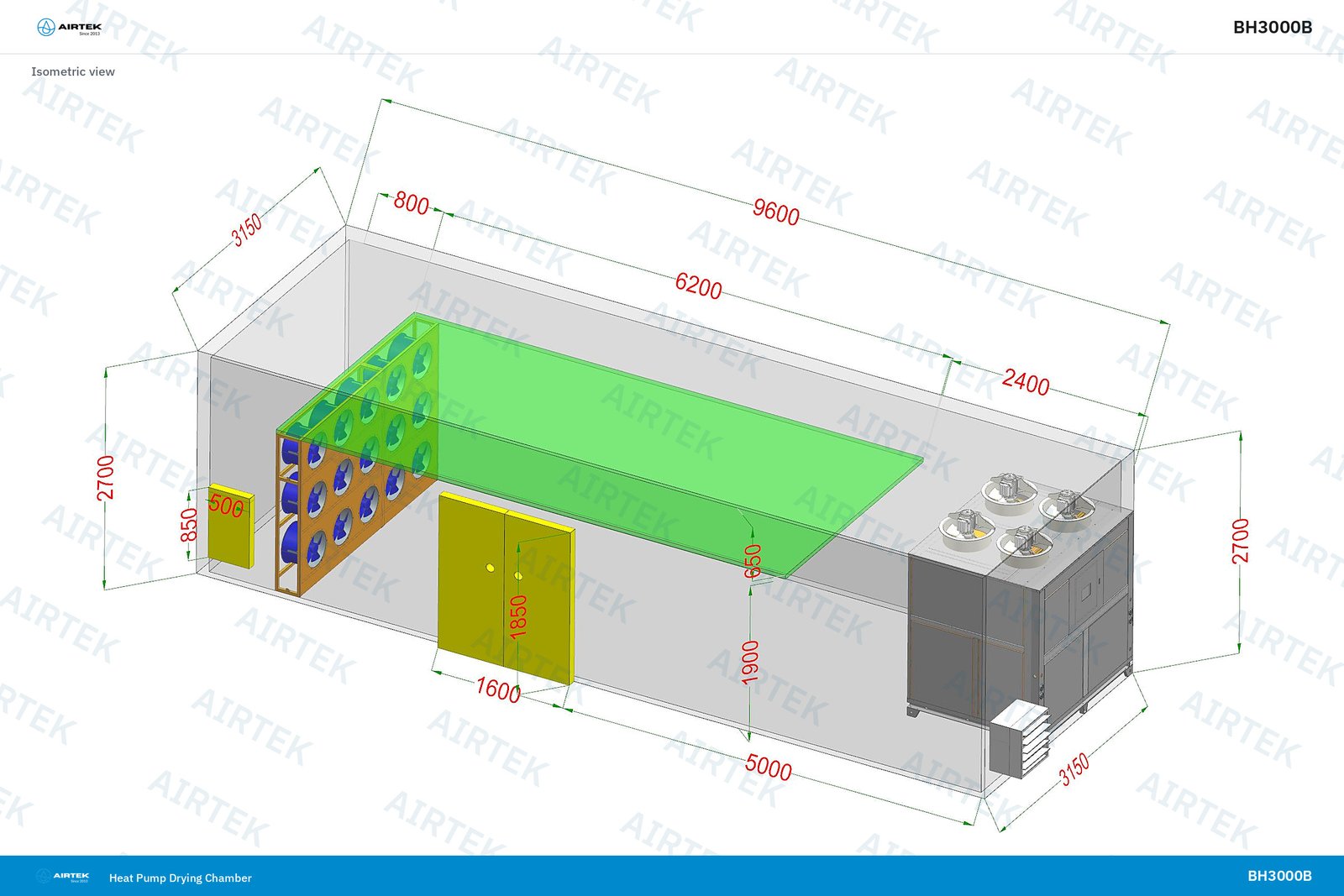
Plan, side, and fan-wall views of the featured BH3000B heat-pump drying chamber. The isometric view is in the opening section above. All figures on the drawings are in millimetres. Select a drawing to view it larger.
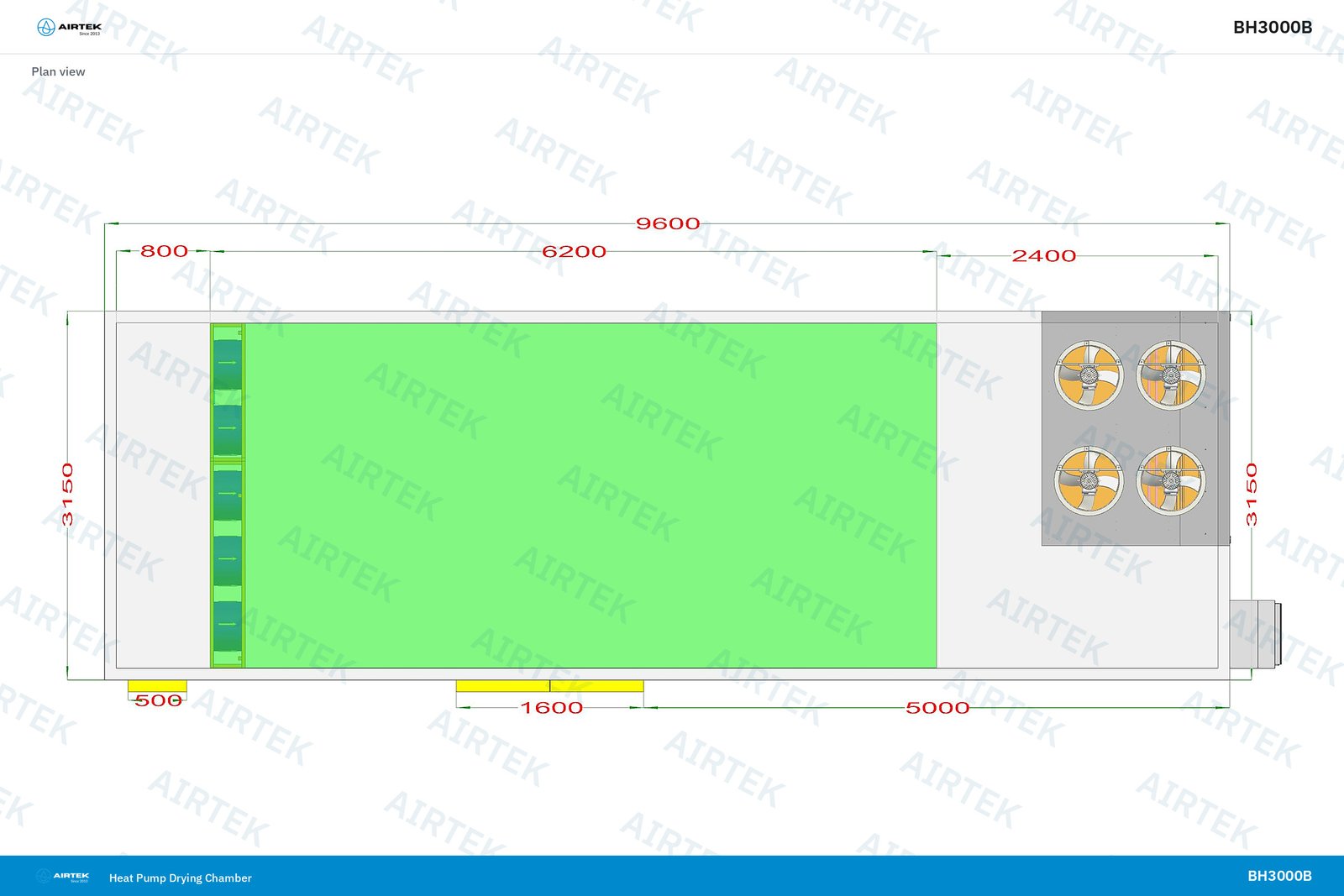
Plan of the BH3000B chamber and heat-pump section. Dimensions in millimetres.
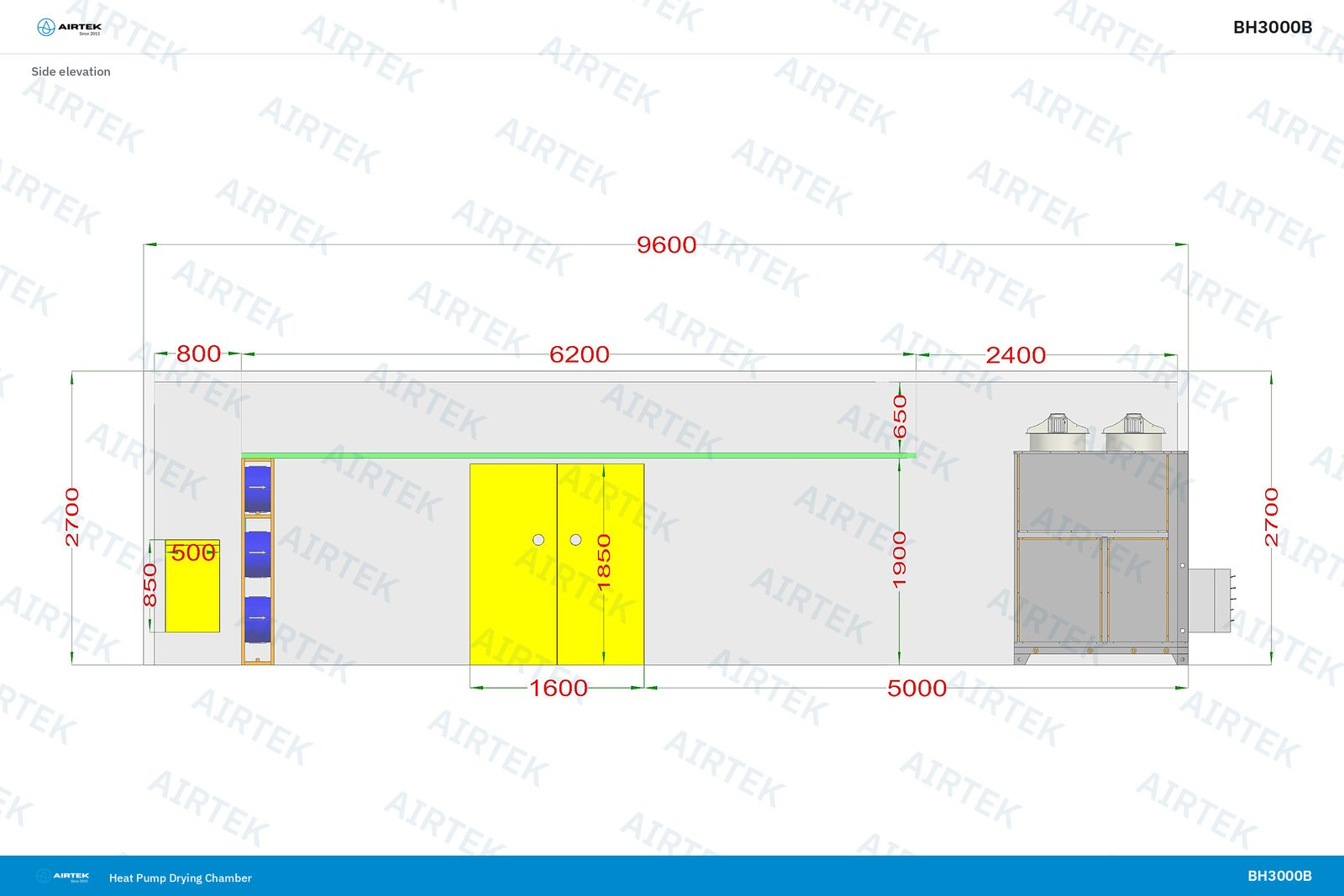
Side view of the chamber, door, and heat-pump section.
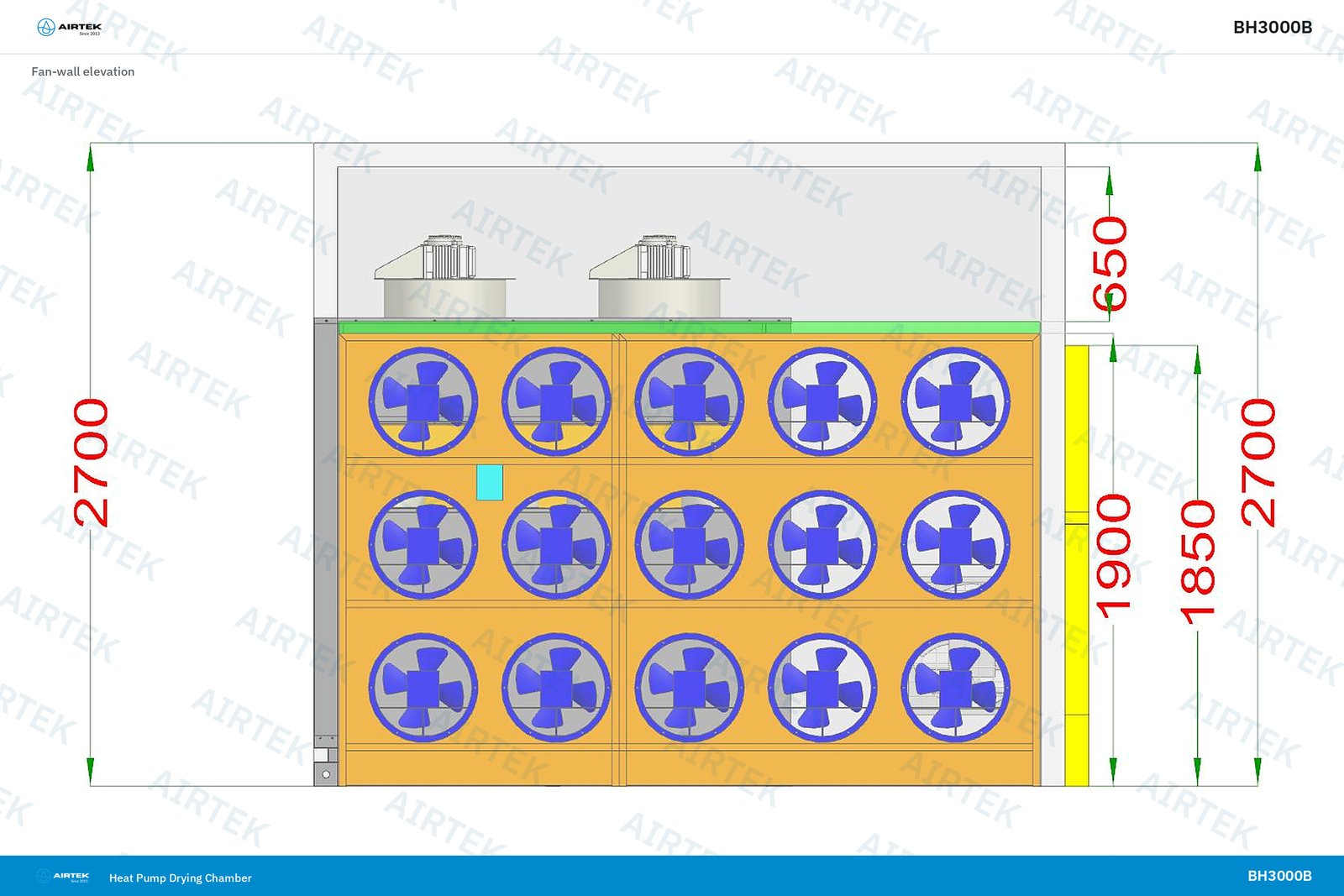
End view of the fan wall, with a 3 × 4 fan array.
Questions we hear first
Chili heat-pump drying, in brief
Short answers for a first project discussion. Moisture bands, color methods, and setpoints are locked with your material and the destination buyer COA — not taken from a generic brochure figure.
What is a chili heat pump dryer used for?
It dries chili, red pepper, and other capsicum products — whole pods, flakes or rings, or pieces bound for a powder pathway — in a closed-loop chamber. The heat pump dehumidifies circulating air by condensation and reheats it back to the product. Buyers typically care about carotenoid color, moisture language that matches a destination COA, and a cleaner hygiene narrative than open sun or poorly controlled hot air. Cycle hours and dry yield are confirmed in trials with your material.
What moisture should dried chili reach for export?
There is no single global moisture number that applies to every cultivar and market. Public frameworks — for example UNECE-style tables for whole dried chillies, often discussed in roughly the high single digits to low teens % m/m depending on type — are conversation starters. Lock both the moisture band and the laboratory method on your destination buyer COA. Whole pods, flakes, and powder pathways may need different bands and sampling plans.
How do I protect red color during drying?
Red–orange chili color is largely carried by carotenoids. Limit unnecessary heat stress, light, and long open holds. Avoid aggressive early heat that dries the surface while the core stays wet, and do not treat “darker” as a substitute for an agreed lab moisture method. Closed-loop humidity control helps you finish drying without defaulting to scorched temperatures; setpoints are confirmed in trials on your cultivar. If a buyer asks for extractable color such as an ASTA value, treat it as a COA negotiation — not a promise that comes from the dryer brand alone.
Is a batch chamber or a continuous belt better for chili?
Irregular whole pods and frequent SKU changes often favor batch tray chambers. Continuous belts need more uniform, free-flowing geometry and a stable volume. The BH3000B shown on this page is a batch heat-pump chamber. Overloading trays is a common cause of uneven color and wet pockets; loading should be confirmed on your trays and cut. Size the project from wet infeed and available hours, not from a slogan tonnage. See also batch versus continuous heat-pump dryers.
What should I send Airtek for a chili or red pepper project?
Please share: product form (whole pods, flakes/rings, or a powder pathway), wet kilograms per day or a peak week, buyer moisture and color notes from the COA if you have them, daily hours or shifts, site voltage, and a hall sketch. Use the product inquiry form, or email or WhatsApp. Other chambers on the heat-pump food dryer hub are useful for browsing; the BH3000B is a full drying chamber, not a small cabinet dryer.
Talk to Airtek about chili drying
Share your product form, wet daily infeed, buyer moisture or color notes, hours, site voltage, and a hall sketch. We will follow up from the inquiry form, email, or WhatsApp.