
Nori & Laver Sheets: Heat-Pump Drying Soft Process Guide
Nori and laver sheets are a sheet-process Soft conversation—color, even dryness, handle, and hygiene—not a hydrocolloid gel story and not a generic “seaweed machine” brochure rewrite. This Soft guide helps sheet processors and export packers ask better heat-pump questions before they size equipment.
Airtek builds closed-loop heat pump food dryer systems for commercial food lines. Soft claims only: no CE numbers, list prices, fake capacity, invented ROI, or customer names. Ready to size a project? Product inquiry.
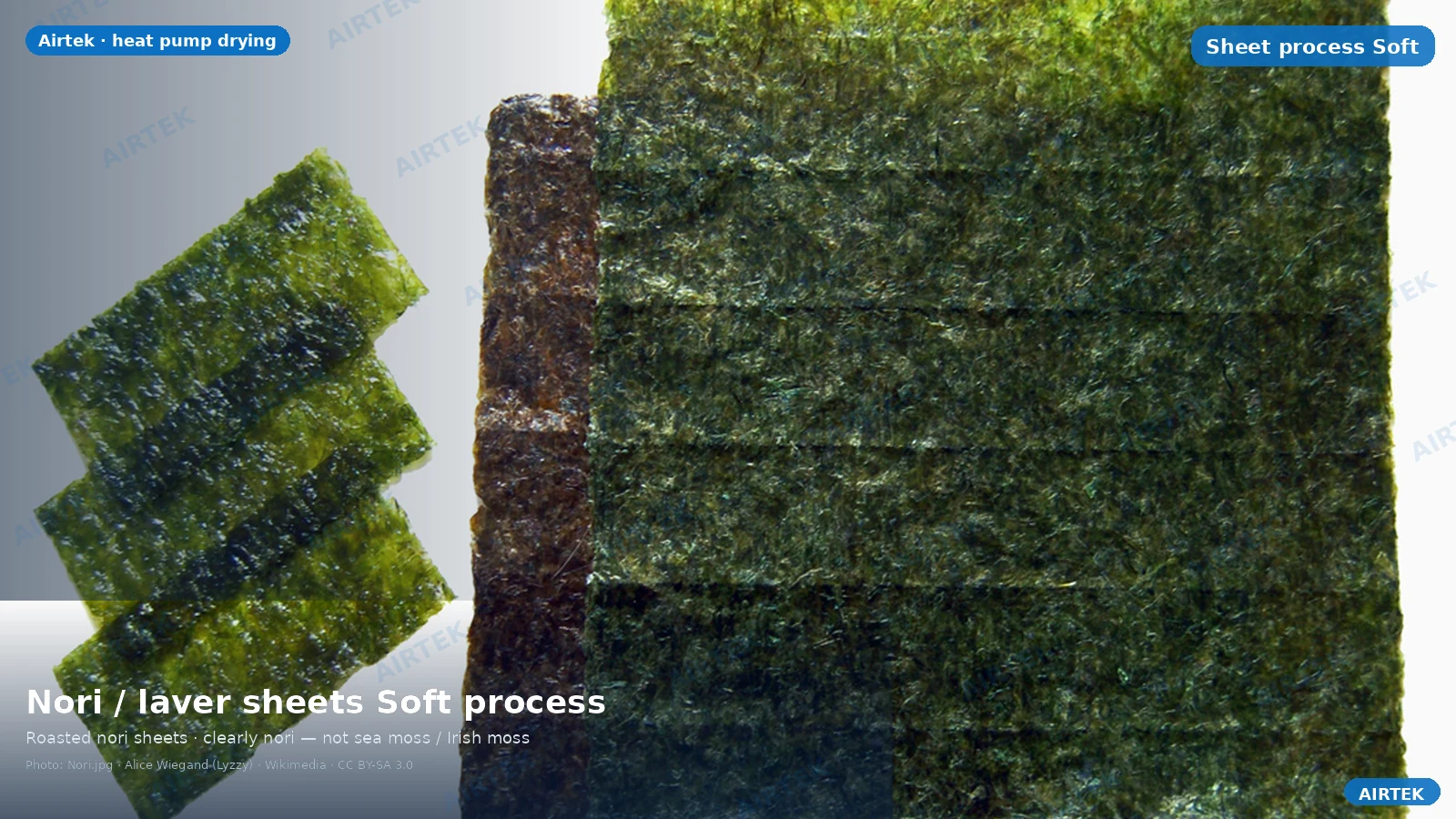
Disambiguation: sheets ≠ sea moss ≠ generic seaweed page
| Topic | What it is | Site link | Use this page? |
|---|---|---|---|
| Nori / laver sheets (this page) | Edible sheet product (Porphyra / laver trade names) | This guide | Yes |
| Sea moss | Irish moss / Chondrus-style hydrocolloid pathway | Sea moss heat-pump drying | No — different SKU |
| Generic seaweed dryer | Machine marketing without confirmed nori/laver in body | Seaweed drying machine | Near-miss only — not a nori substitute |
If you dry sea moss gel or flakes, stop and use the sea moss guide. If you dry nori or laver sheets, keep reading. Do not paste sea-moss gel narratives into a sheet RFQ.
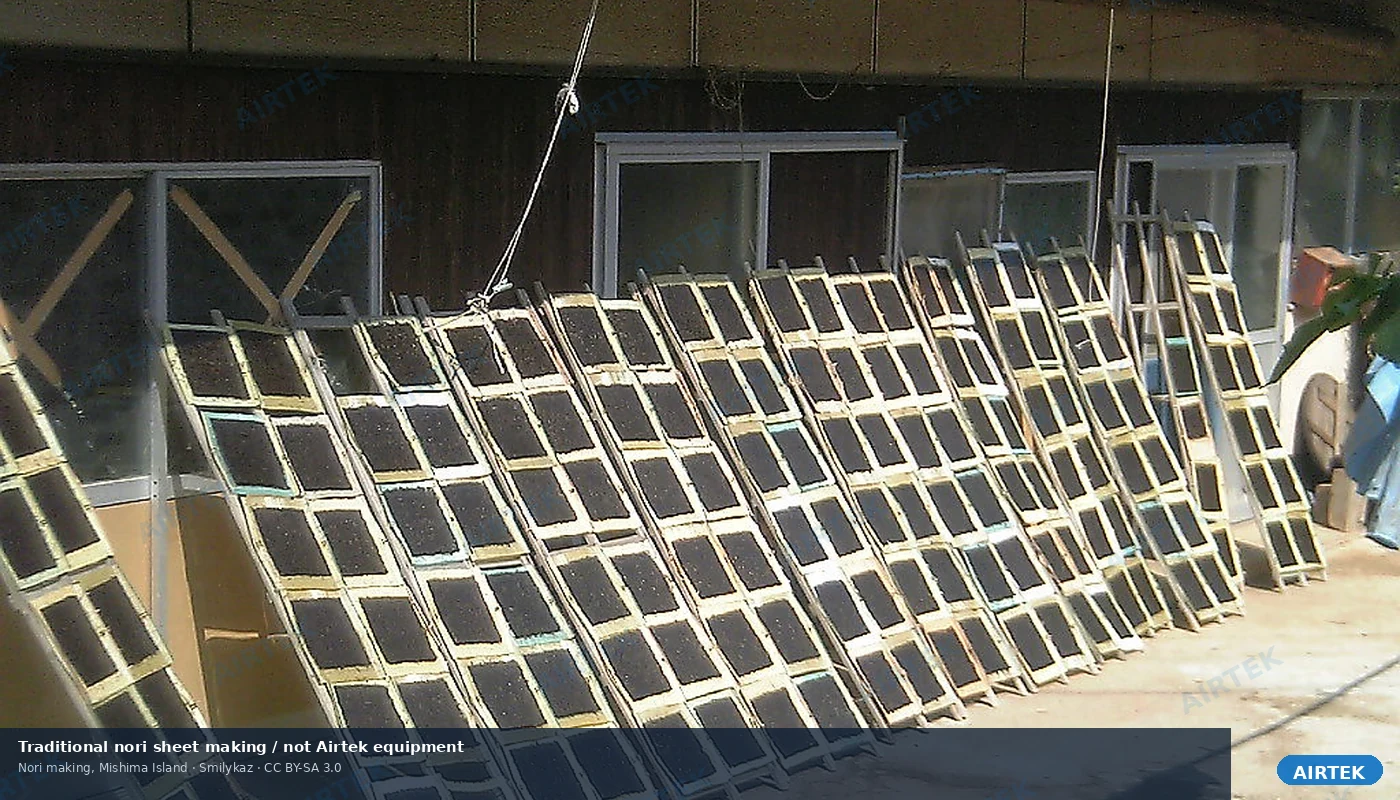
Sheet process stages buyers usually describe
Sheet lines differ by plant, but Soft RFQs usually name stages like these (describe yours; do not invent recipes here):
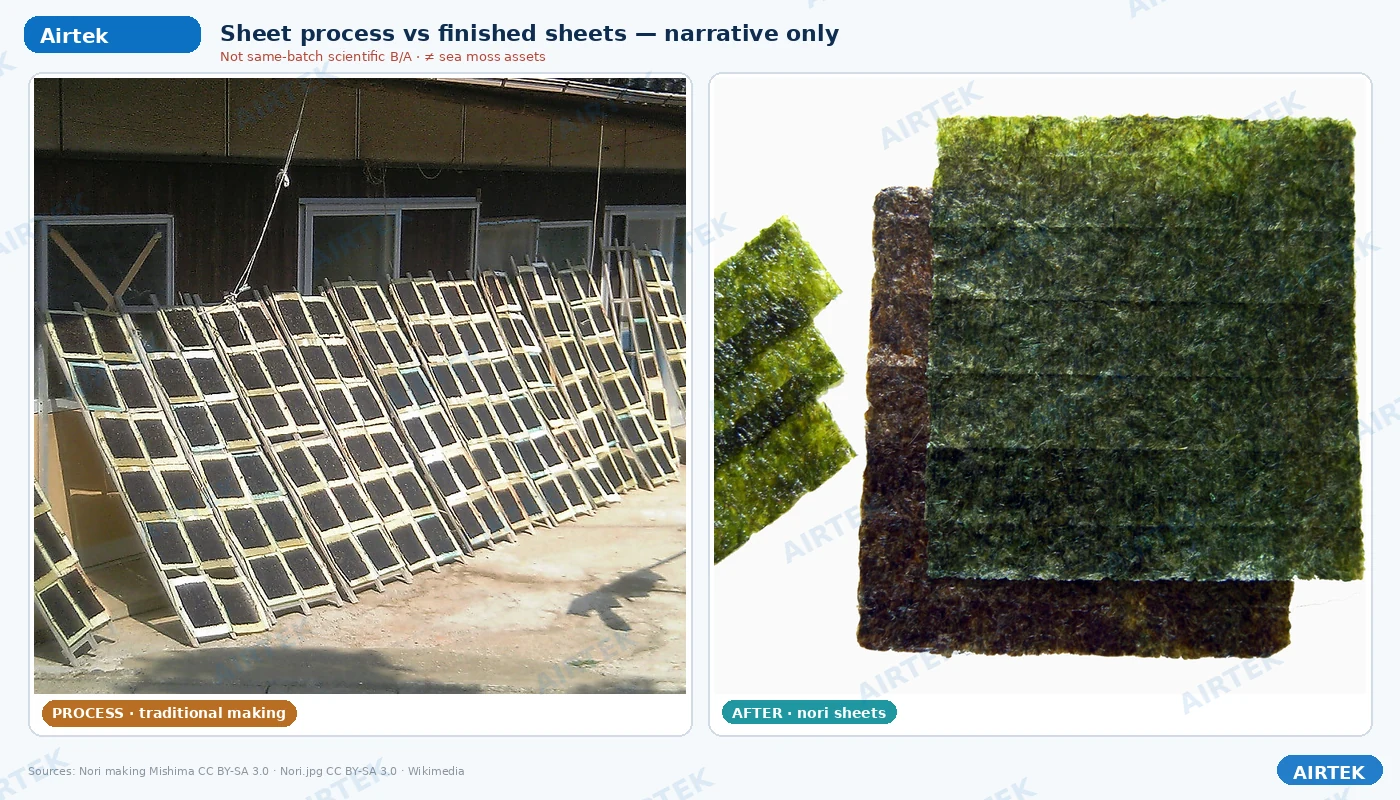
- Raw intake — washed material readiness for sheet forming
- Sheet forming — how wet sheets or mats are produced (parameters live in plant SOP)
- Drain / surface water — free water load before chamber drying
- Heat-pump drying — staged air for color and even moisture
- Finish / pack — brittleness, cut, and pack-humidity awareness
This page is not a papermaking textbook. It is a dryer Soft conversation for plants that already know their forming story and need chamber questions that match sheets, not paste cakes or gel blocks.
Quality asks: color, brittleness, even moisture, hygiene
Sheet buyers Soft often care about:
- Color — avoiding scorched, blotchy, or uneven browning across a sheet lot
- Even dryness — edge-dry with center-wet is a classic sheet failure mode
- Brittleness / handle — pack and cut behavior (targets from buyer / QC, not this blog)
- Hygiene — enclosed chamber vs open drying risk (dust, insects, rain re-wetting)
Useful Soft questions for a heat pump food dehydrator:
- Which stages protect color early, then finish to pack readiness?
- How even is airflow across trays or carriers holding sheets?
- Can operators document a repeatable recipe across shifts?
- How do you talk about humidity when sheets are thin and change quickly?
Related umbrella reading: low-heat food dehydrator process FAQ. We do not lock °C/RH tables or national moisture standards in this article—those belong in project estimates after you share sheet geometry and pack targets.
Equipment short pointer (cabinet + G3 Soft)
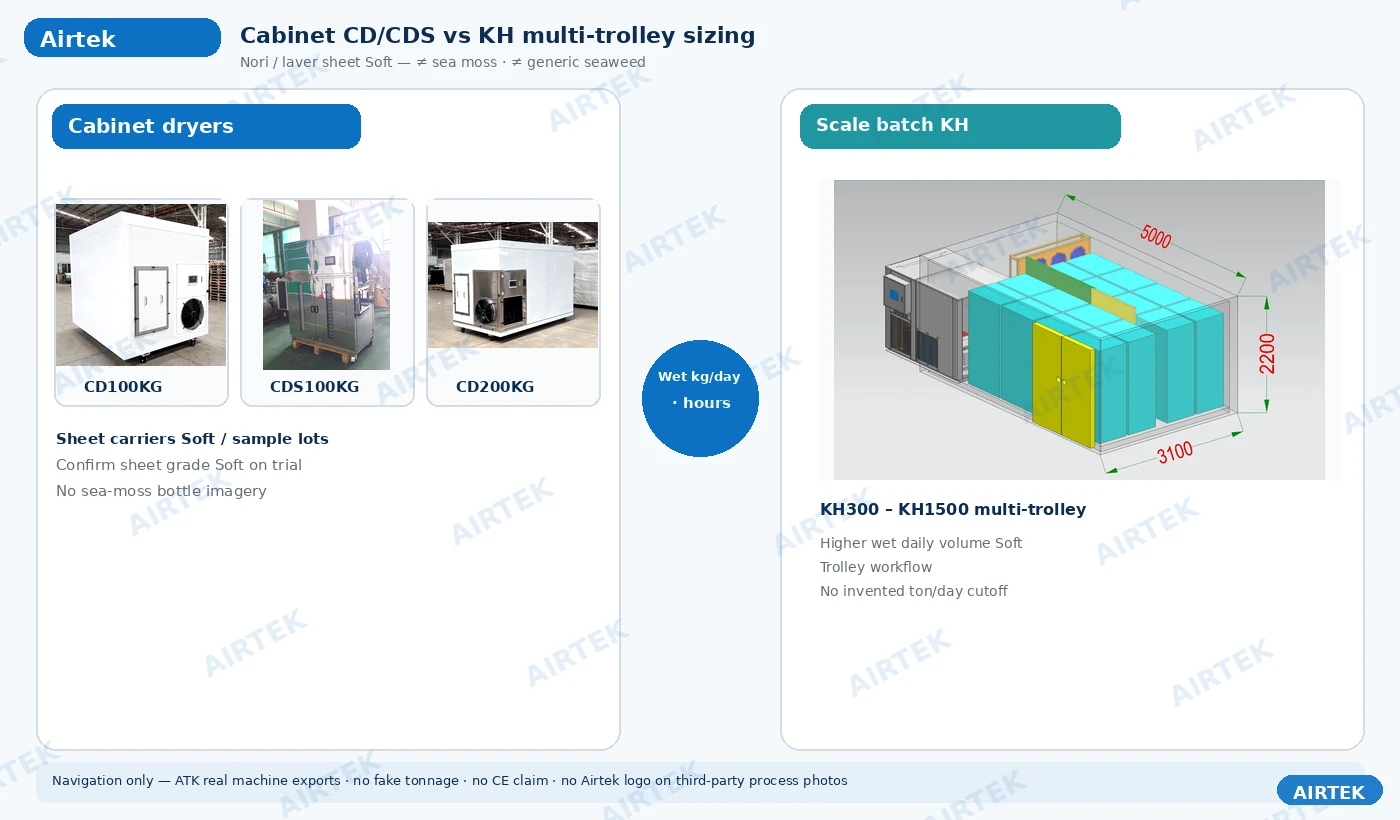
For many sheet lots, a batch Soft cabinet food dryer conversation is a natural first stop—graded lots, recipe changes, and tray discipline. Deep batch vs continuous Soft selection lives on batch vs continuous heat pump dryer (G3 Soft). Soft energy framing (no invented multiples): energy saving vs hot air.
Do not invent belt speeds, layer counts, or ton/day claims here. Sheet geometry and forming story belong in inquiry, not a fake capacity table.
Short RFQ mini-block for nori / laver sheets
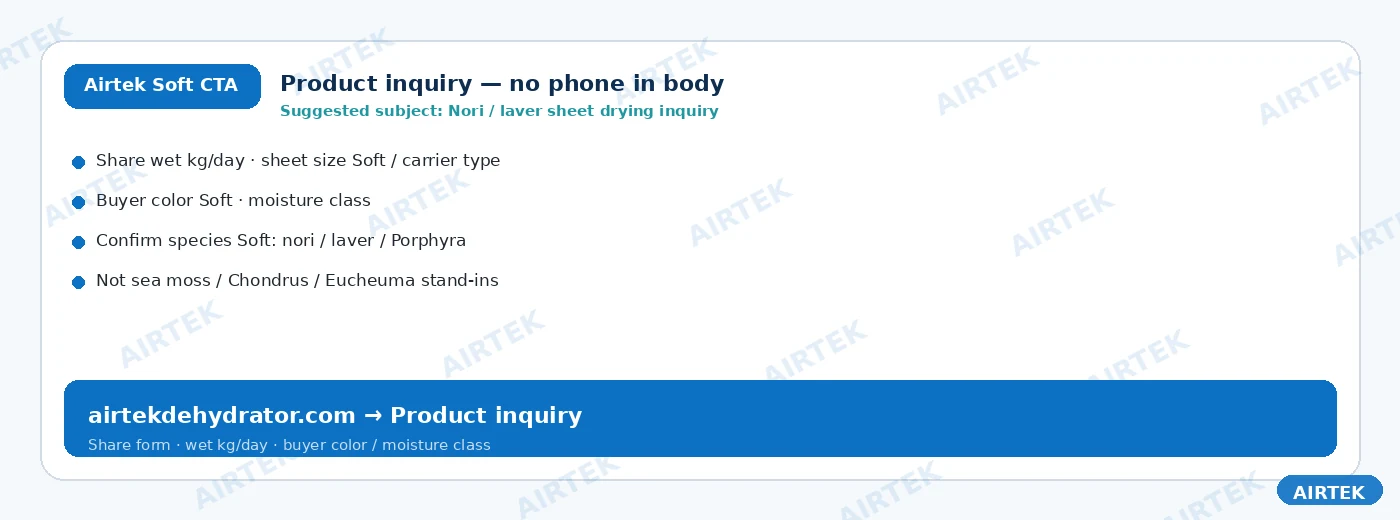
Use this Soft list when you request an Airtek estimate:
| RFQ field | Why it matters |
|---|---|
| Sheet identity (nori / laver / market name) | Confirms sheet SKU—not sea moss |
| Wet sheet size / thickness language | Evenness and loading |
| Typical wet batch Soft (kg/day range OK Soft) | Cabinet vs continuous Soft pointer |
| Color Soft priority | Early-stage Soft conversation |
| Pack finish (brittleness / cut) | QC language, not a blog % |
| Hygiene / export destination Soft | Documentation conversation |
| Site power (voltage / phase) | Utilities fit |
| Preference Soft: cabinet trays vs continuous Soft | Points to selection, not a fake tonnage claim |
Optional Soft: ask for sample drying photo pairs (wet→dry sheets) from comparable projects when available—do not assume existing public seaweed media are labeled nori B/A.
Soft FAQ
Q1. Is this the same as the sea moss drying page?
No. Sea moss is a different SKU pathway (sea moss heat-pump drying). This Soft page is for nori / laver sheets.
Q2. Can we use the generic seaweed drying machine post as our nori landing page?
Treat it as a near-miss only (seaweed drying machine). It is not a confirmed nori Soft substitute. Use this sheet guide for RFQ language.
Q3. Do you publish sheet moisture standards or °C/RH tables here?
No. Finish targets follow your buyer COA and plant SOP. Soft process questions belong on this page; setpoints belong in inquiry and trial.
Q4. What should we send to start an estimate?
Sheet identity, size Soft language, batch Soft range, color priority, pack finish language, and site power—via product inquiry.
Related reading
- Machine hub: heat pump food dryer machine
- Low-heat umbrella: low-heat food dehydrator process FAQ
- Cabinet pointer: cabinet food dryer
- Anti-collision: sea moss heat-pump drying · seaweed drying machine
Next step: share your RFQ fields and request a project estimate. Soft claims only—Airtek, not a price list.