
Commercial Dehydrator Machine Solutions
Cabinet, trolley, and mesh-belt heat-pump dehydrator machines for food plants.
A commercial dehydrator machine should match how your plant actually runs: wet infeed, product form, available hours, and the hygiene standard you have to meet. This page is the Airtek entry point for dehydrator machines used in food and agricultural drying—cabinet systems, multi-trolley batch lines, and continuous mesh-belt dryers—plus container and bulk-bed options when the site or the crop calls for them.
If you are comparing a dehydrating machine for fruit, vegetables, herbs, spices, meat, seafood, or a similar agricultural product, start here. An air drying machine for food is only useful when temperature, airflow, and moisture removal stay even across the load. Browse the series below, then share your material and capacity on the inquiry form so we can recommend a fit.
Airtek heat-pump food dryers are built for commercial and industrial plants, not kitchen countertop units and not laundry dryers. Catalog names help you navigate. Final sizing should follow your wet weight, target moisture, and available operating hours.
Cabinet food dryers
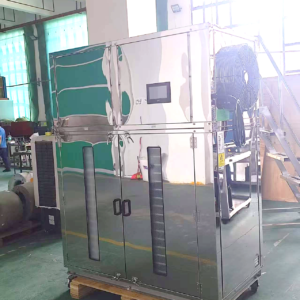
Cabinet dehydrator machines suit trials, specialty packs, frequent product changeovers, and plants that need a compact chamber rather than a long belt. Load trays, set the program, and run a batch with a smaller footprint.
Explore the cabinet food dryer series, or open the cabinet food dryers category.
Batch tray / trolley heat-pump dryers
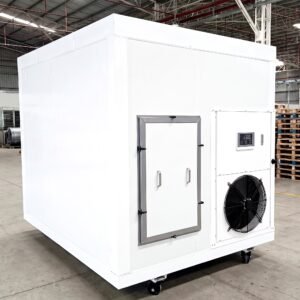
Multi-trolley batch systems are the usual plant-scale dehydrating machines when you need flexible recipes, staggered loading, and enough chamber volume for commercial daily wet infeed. Trays and trolleys go into an insulated drying room with circulating air and programmed temperature and dehumidification.
See heat pump food dryer machines and the batch tray heat pump dryers category.
-

1000-1200 kgs/batch Capacity Dryer Machine | Drying Equipment
-
1200 kgs/batch Capacity Dryer Machine | Drying Equipment
-
1200-1500 kgs/batch Capacity Dryer Machine | Drying Equipment
-
200-300 kgs/batch Capacity Dryer Machine | Drying Equipment
-
500-600 kgs/batch Capacity Dryer Machine | Drying Equipment
-
700-800 kgs/batch Capacity Dryer Machine | Drying Equipment


Continuous conveyor / mesh-belt dryers
When the same thin or consistent product runs for many hours, a continuous mesh belt dryer—the same class of machine as a conveyor belt dryer—moves product through the tunnel instead of cycling complete chamber batches. This architecture is a better fit for steady wet flow than for many small SKU changeovers.
Explore the continuous conveyor belt dryer machine page for the difference versus batch systems.
Container / mobile dryers
Containerized and mobile heat-pump dryers are useful when you need a relocatable chamber, a constrained civil-work window, or a self-contained plant layout. Configurations depend on the site and the product.
Explore container / mobile dryers.
Bulk drying beds
Bulk drying beds are used for deeper-layer or loose materials that do not sit naturally on trays or a thin belt. The right bed design depends on feedstock depth, airflow, and the moisture endpoint you need.
Explore bulk drying beds.
Request a drying solution quote
Tell us the material, product form, wet capacity, target moisture, and site power. Airtek will follow up with a recommendation from the existing cabinet, trolley, mesh-belt, container, or bulk-bed series—no invented model lines, and no one-size claim that every dehydration dryer fits every crop.
How to choose a dehydrator machine
Use this page to shortlist an architecture, then judge the machine against a shared plant brief:
- Product and form (whole, slices, shreds, leaves, granules)
- Wet weight per batch or per day, including harvest peaks
- Initial and target moisture (and water activity, if your specification requires it)
- Hours and shifts available
- Batch flexibility versus continuous flow
- Site power, footprint, and hygiene access
A useful air food dryer, air dryer for food, or other dryer machine for foods is defined by even drying and a realistic capacity story—not by a brochure headline alone. For the selection framework, read How to Choose a Commercial Food Dehydrator Machine. For batch versus continuous, see Batch vs continuous heat pump dryer.
Material guides also live under Food Drying Technique.