
What are the Health Benefits of Using an Industrial Food Dehydrator?
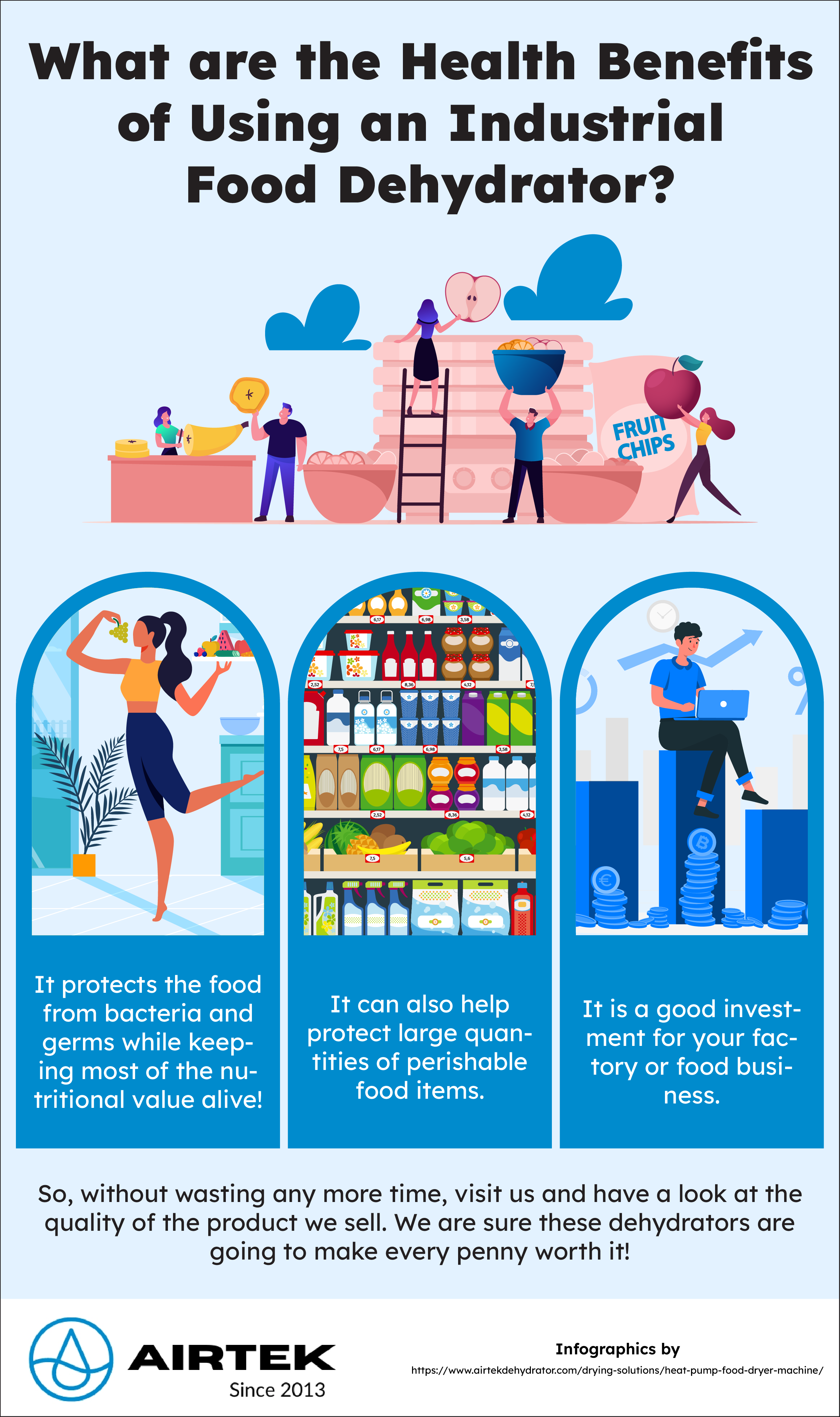
Food business owners ask about the health benefits of using an industrial food dehydrator because dried products sit at the intersection of nutrition marketing, clean-label pressure, and shelf-life reality. This article keeps that H1 intent but stays honest: equipment supports process control—it does not turn every snack into a medical food, and Airtek does not invent nutrient-retention percentages or clinical claims.
Think in plant language: gentler thermal history conversations, less reliance on some preservatives when water activity is controlled, cleaner enclosed drying versus dusty yards, and consistent moisture that reduces spoilage waste. Soft claims only. Explore Airtek heat pump food dryers.
Benefit framing · Nutrient-aware drying conversations
Many buyers prefer controlled, moderate air temperatures over harsh open-fire or uncontrolled blast heat when they market “carefully dried” fruit, herbs, or vegetables. A heat pump food dehydrator supports staged profiles and humidity finishing that help that conversation. Final nutrient numbers belong in a lab on your recipe—not in a blog guarantee.
Benefit framing · Water activity and spoilage control
Removing moisture lowers water activity, which supports shelf-life programs when paired with hygiene and packaging. That is a food-safety process benefit, not a cure claim. Confirm targets with your QA method and buyer COA.
Benefit framing · Clean-label and additive narratives
Some products use drying plus good packing to reduce dependence on certain preservatives. Whether that fits your label is a regulatory and formulation decision. The industrial dehydrator is one tool among washers, sealers, and labs.
Benefit framing · Hygiene versus open-air exposure
Enclosed chambers reduce dust, insect, and bird exposure common in sun yards—supporting a healthier production environment story for auditors and customers. Hardware still needs cleaning SOPs; see GMP as separate from the machine brochure.
Benefit framing · Less food waste from failed batches
Uneven sun drying creates moldy or fermented lots that become waste. More consistent industrial drying can cut that waste stream—good for cost and for sustainability talks—without inventing a fixed waste-reduction percentage here.
Benefit framing · Portion control and ingredient transparency
Dried ingredients let formulators dose fiber, fruit, or herb powders predictably. Industrial consistency helps R&D and production agree on specs. Browse application categories: fruits & vegetables, herbs & spices.
What we will not claim
- No disease treatment or “superfood cure” language
- No invented vitamin retention percentages
- No “hospital grade” or certificate numbers without confirmation on inquiry
- No prices or payback math
Heat pump role (soft)
Heat-pump loops condense moisture and return drier air, which many plants prefer when discussing aroma- and color-sensitive foods. Energy should be discussed as kWh per kg water removed under stated assumptions. Keep the food qualifier so searches do not drift into laundry dryers.
Practical plant checklist for “health-minded” drying
- Define moisture / Aw targets per SKU with QA.
- Prefer staged profiles; avoid blast-hot shortcuts in trials.
- Document cleaning between allergen or strong-aroma lots.
- Pack in controlled ambient; watch post-dry moisture pickup.
- Verify any on-pack nutrition claims with accredited testing—not dryer marketing.
Cabinet pilots (CDS100KG) and larger KH trolleys both fit this disciplined approach at different scales.
Who this matters to
Snack brands, school-meal ingredient suppliers, herbal tea packers, and exporters answering retailer questionnaires. If you only need bulk biomass dried for fuel, “health benefit” framing may be the wrong page—use a materials RFQ instead via product inquiry.
Linking to everyday industrial practice
Health-minded messaging still needs ordinary factory discipline: calibrated sensors, tray maps, and refusal to ship under-dried lots. The advantage of an industrial machine is that those controls are easier to enforce than on a sun yard.
Consumer-facing language vs factory reality
Marketing teams may want bold “locks in vitamins” headlines. Factory teams should answer with process controls and lab results. Using an industrial dehydrator helps you manage thermal history; it does not license exaggerated health copy. Align marketing with QA before packaging claims go live.
When retailers ask “how do you dry?”, pointing to a heat pump food dehydrator with batch records is stronger than pointing at a sun mat photo.
FAQ
Does drying destroy all nutrients?
Thermal history affects some nutrients; others remain meaningful in dried foods. Measure your product—do not cite a universal percentage from this article.
Is industrial drying “healthier” than frying?
Different processes, different products. Drying is not automatically a medical upgrade over every other preservation method.
Can Airtek help with organic or export plants?
Describe certification needs on inquiry; do not assume marks from a blog.
Next step
Review the hub, map your SKUs to categories, and send process goals through product inquiry.