
Sea Cucumber Drying Soft FAQ: Low-Heat Heat-Pump Questions
Sea cucumber (also called trepang or bêche-de-mer in some trade lanes) is a quality-first drying conversation. Buyers searching a sea cucumber dryer rarely want a generic “top 10 dehydrator benefits” page. They want low-heat Soft questions—how to talk about temperature stages, humidity, loading, and grading without inventing lab numbers or health claims.
This Soft FAQ is for processors and raw-material plants. Airtek builds closed-loop heat pump food dryer systems for commercial food lines. Soft language only: no CE numbers, list prices, fake tonnage, invented ROI, or customer names. When you are ready to size a project: product inquiry.
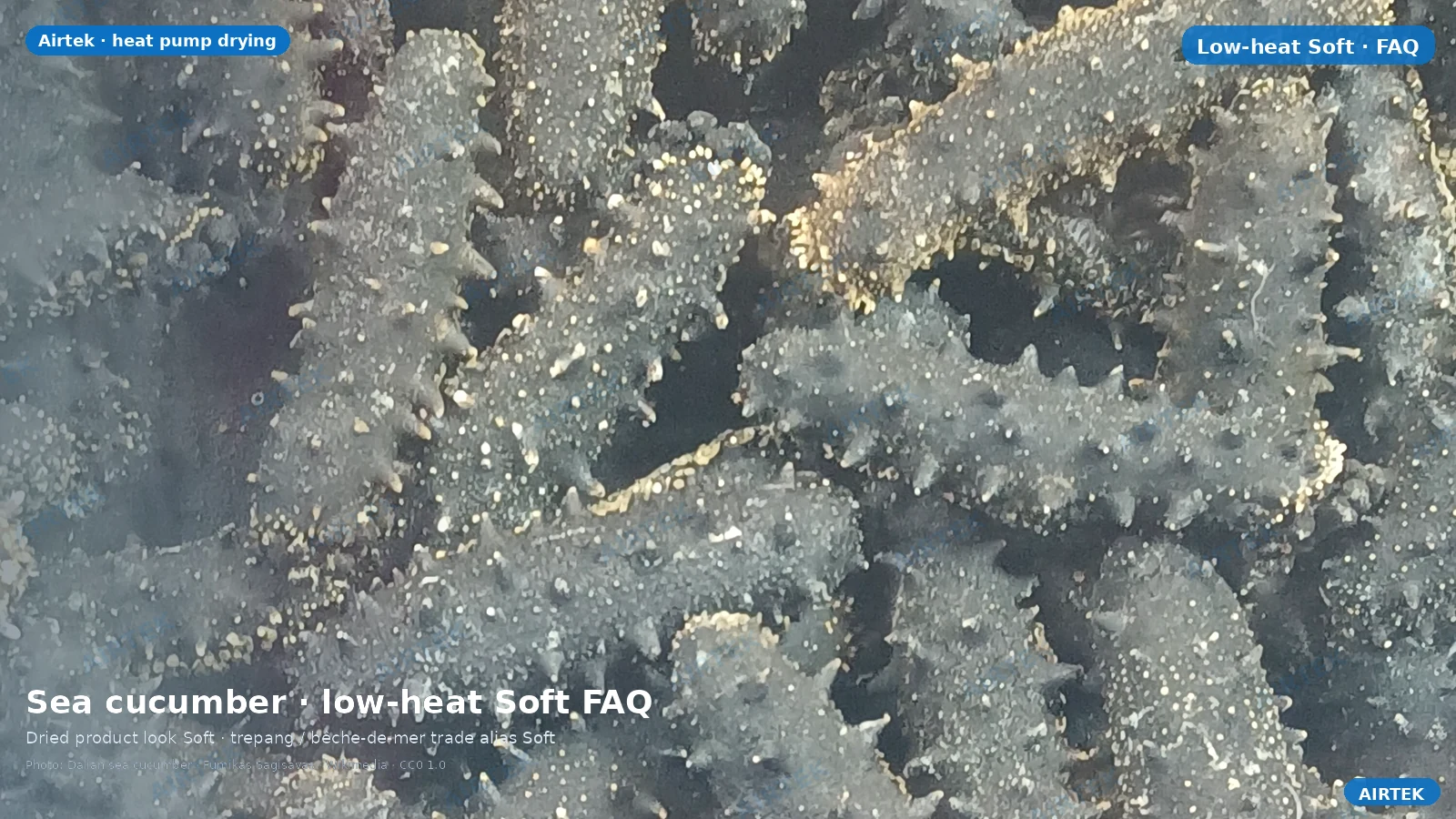
Why buyers ask “low heat” Soft (no medical claims)
In plant language, “low heat” for sea cucumber is usually about protecting appearance and texture Soft—avoiding scorched surfaces, uneven case-hardening, or “cooked-out” looks—not about therapeutic claims. This page does not discuss medical, tonic, or efficacy stories. Destination markets set their own quality and labeling rules; your COA and buyer specs win over any blog sentence.
What quality Soft conversations often cover:
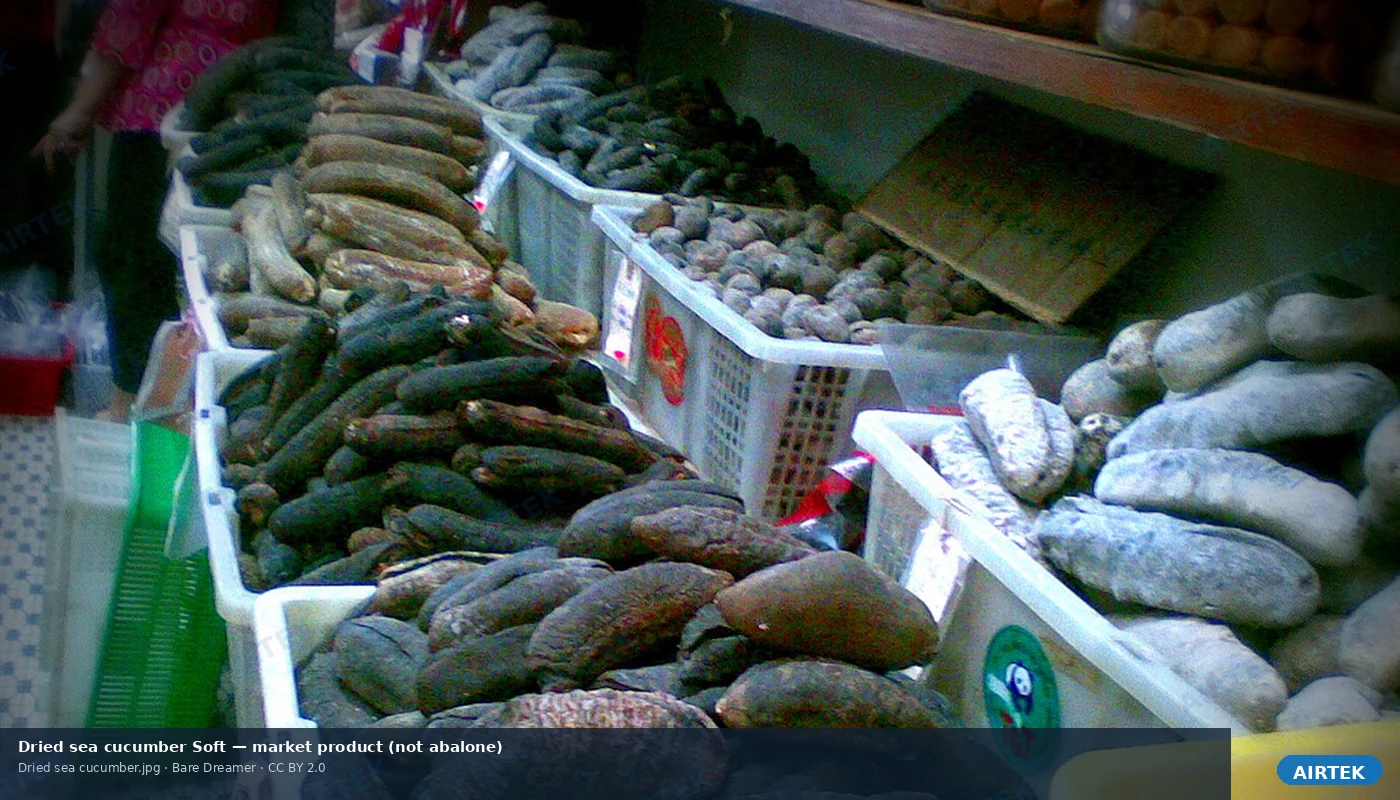
- Color Soft — avoiding dark, uneven, or overheated looks across a lot
- Shape Soft — graded pieces that stay recognizable after drying
- Even moisture Soft — edge-dry / center-wet risk on thick pieces
- Hygiene Soft — enclosed chamber vs open yards (dust, insects, rain re-wetting)
For the generic low-heat process FAQ (not sea-cucumber-specific), see low-heat food dehydrator process FAQ. This page lands that Soft frame on sea cucumber.
FAQ 1 — What should we ask about temperature and humidity Soft?
Ask for a staged conversation, not a single magic °C promise:
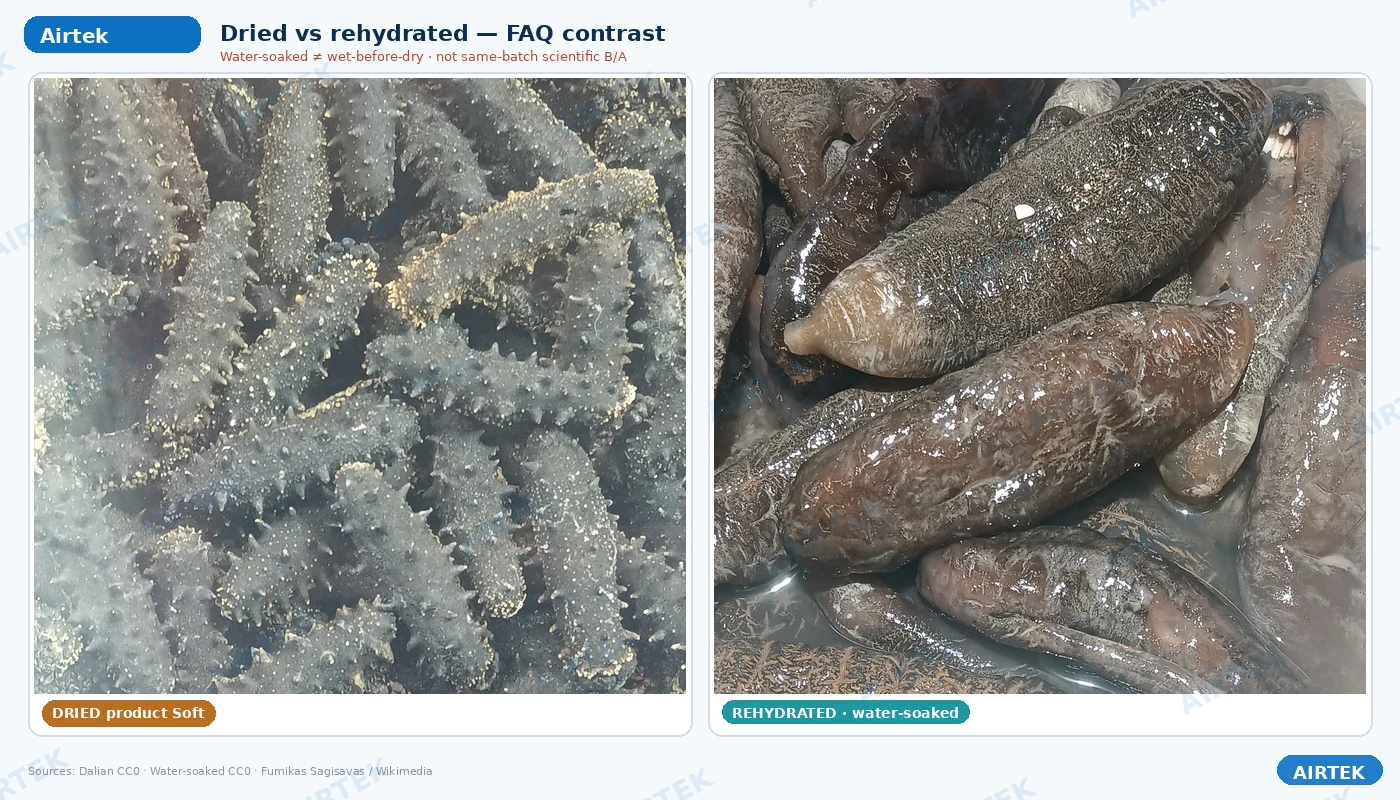
- Which early stage Soft protects surface Soft before aggressive finishing?
- How do you talk about humidity Soft when pieces are hygroscopic or thick?
- Can operators document a repeatable recipe across shifts?
- What belongs in a plant trial vs a brochure sentence?
Soft rule: this blog does not publish °C/RH tables. Confirm setpoints on inquiry and trial after you share species, piece size, salt Soft, and pack targets.
FAQ 2 — How do loading, grading, and salt Soft change the dryer talk?
Sea cucumber lots are rarely “one size fits all.” Soft RFQ language should describe:
- Grading Soft — size bands that change tray density and evenness risk
- Loading Soft — single layer vs stacked Soft habits; airflow Soft across the trolley
- Salt Soft — whether salt is part of the product identity (targets live in your SOP / buyer spec, not here)
- Resting Soft — whether your process includes rests between stages (describe; do not invent minutes)
Uneven grading plus crowded trays is a common reason plants blame “the machine” when the real Soft issue is loading discipline. Name those Soft items early in product inquiry.
FAQ 3 — Why do heat-pump food dehydrators show up in low-heat sea cucumber talks?
Open hot rooms often push heat and exhaust moist air. A heat pump food dehydrator typically cools process air so water condenses and drains, then returns warmer, drier air to trays. That closed loop supports Soft conversations about humidity stages and repeatable chamber conditions—useful when quality Soft matters more than “maximum heat.”
Soft energy framing (no invented multiples): heat pump dryer energy saving vs hot air. Machine navigation: hub.
Heat pump is not automatic proof that every lot should run “as cool as possible.” Some finishes need higher stages later. The useful Soft question remains: what temperature and humidity path hits my pack Soft target without wrecking appearance?
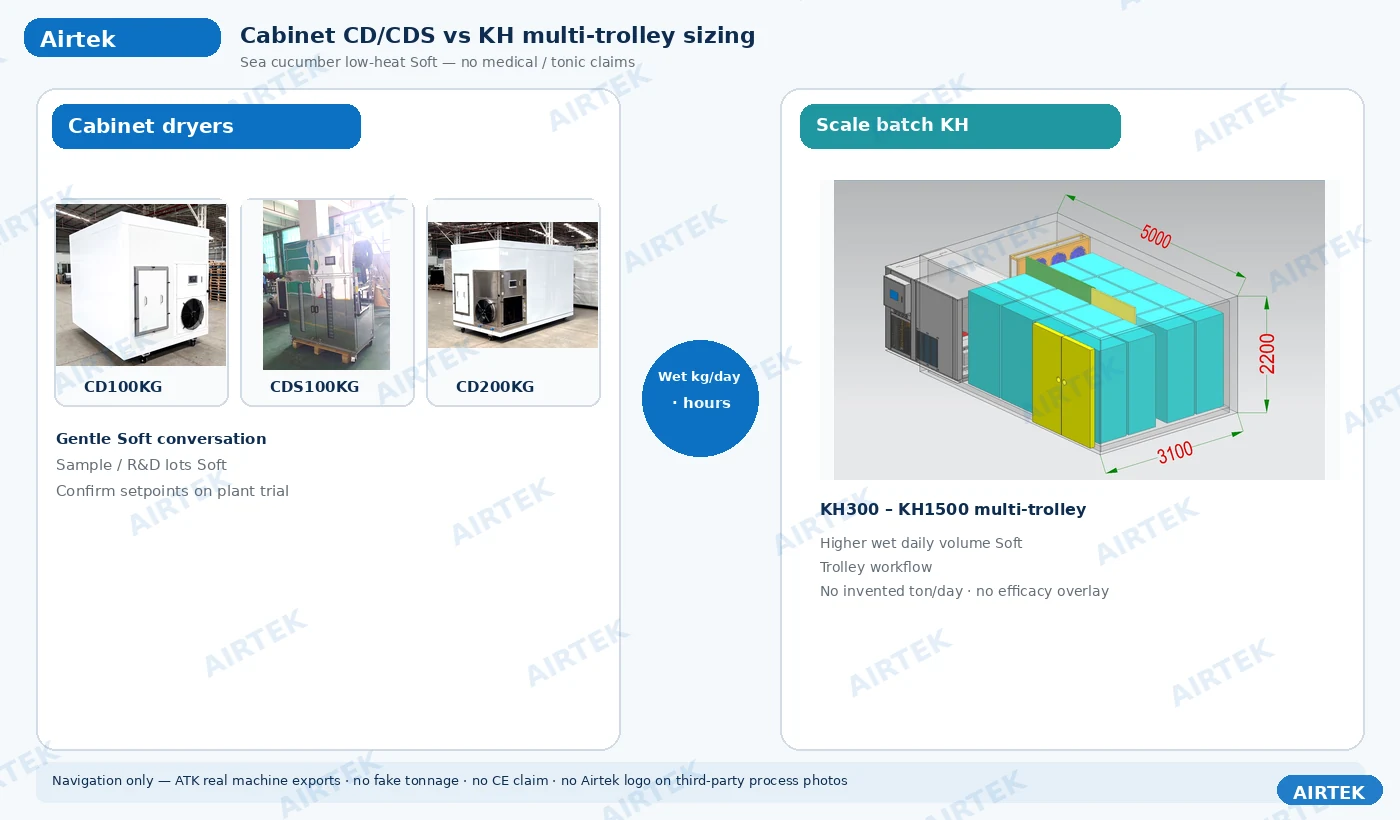
FAQ 4 — Is a cabinet dryer Soft enough, or do we need a long selection essay?
For many graded sea cucumber lots, a batch cabinet food dryer Soft conversation is the first stop—especially when lot sizes, grades, and recipes change. Deep cabinet vs belt selection for other seafood forms lives elsewhere (for example dried squid Soft selection). This FAQ only points: tell us lot Soft, grade Soft, and whether you need frequent recipe Soft changes.
Do not invent belt speeds, layer counts, or ton/day claims on this page.
FAQ 5 — How is this different from the general low-heat FAQ?
| General low-heat FAQ | This sea cucumber FAQ | |
|---|---|---|
| Angle | Cross-crop Soft process questions | Sea cucumber quality Soft + loading Soft |
| Alias Soft | Generic food | Trepang / bêche-de-mer once |
| Deep selection | Points to G3 Soft | Cabinet Soft pointer only |
| Claims | No medical / no fake % | Same Soft discipline |
Read both if useful: low-heat process FAQ for the umbrella Soft list; this page for SKU Soft landing.
FAQ 6 — What should we send with an Airtek inquiry Soft?
Copy into your inquiry (no phone numbers in this article):
- Confirm product: sea cucumber / trepang Soft (species Soft if known)
- Form Soft: whole / split / pieces Soft
- Pretreatment Soft: clean / salt Soft / grade Soft (describe; no invented %)
- Piece size Soft bands
- Pack Soft target language your QC uses (moisture / Aw Soft words—your numbers, not ours)
- Color / appearance Soft expectations (buyer photo Soft if any)
- Site utilities Soft (voltage / phase)
- Preference Soft: batch cabinet vs other (selection later)
- Whether you need wet→dry sample photos Soft for internal review
Start here: product inquiry.
Soft hygiene Soft (short)
Buyers often ask about dust / insects / rain Soft on open yards and whether chamber Soft conditions can be recorded across shifts. Enclosed heat-pump Soft drying does not replace your HACCP Soft program—it changes the consistency Soft story in wet seasons.
Related Soft reading
- Low-heat food dehydrator process FAQ
- Heat pump food dryer machine hub · Cabinet food dryer · Energy saving vs hot air
Soft CTA
Sizing a sea cucumber dryer around low-heat Soft quality? Send species Soft, grade Soft, pack Soft language, and utilities Soft via Airtek product inquiry. Soft project questions only—no invented moisture tables, medical claims, or list prices here.