
Export-Grade Dried Fish: Retain Color & Flavor with Heat-Pump Soft Control
Export buyers rarely open with “how many kilowatts?” They open with color, flavor, and hygiene—whether a dried fish lot will pass a buyer’s visual and sensory check after transit. This Soft guide is for seafood processors and export traders who want a heat-pump food dehydrator conversation framed around export quality, not a machine brochure rewrite.
Airtek builds closed-loop heat pump food dryer systems for commercial plants. Soft language only: no invented moisture percentages, no fake tonnage, no list prices, and no customer names. When you are ready to size a project, use product inquiry.
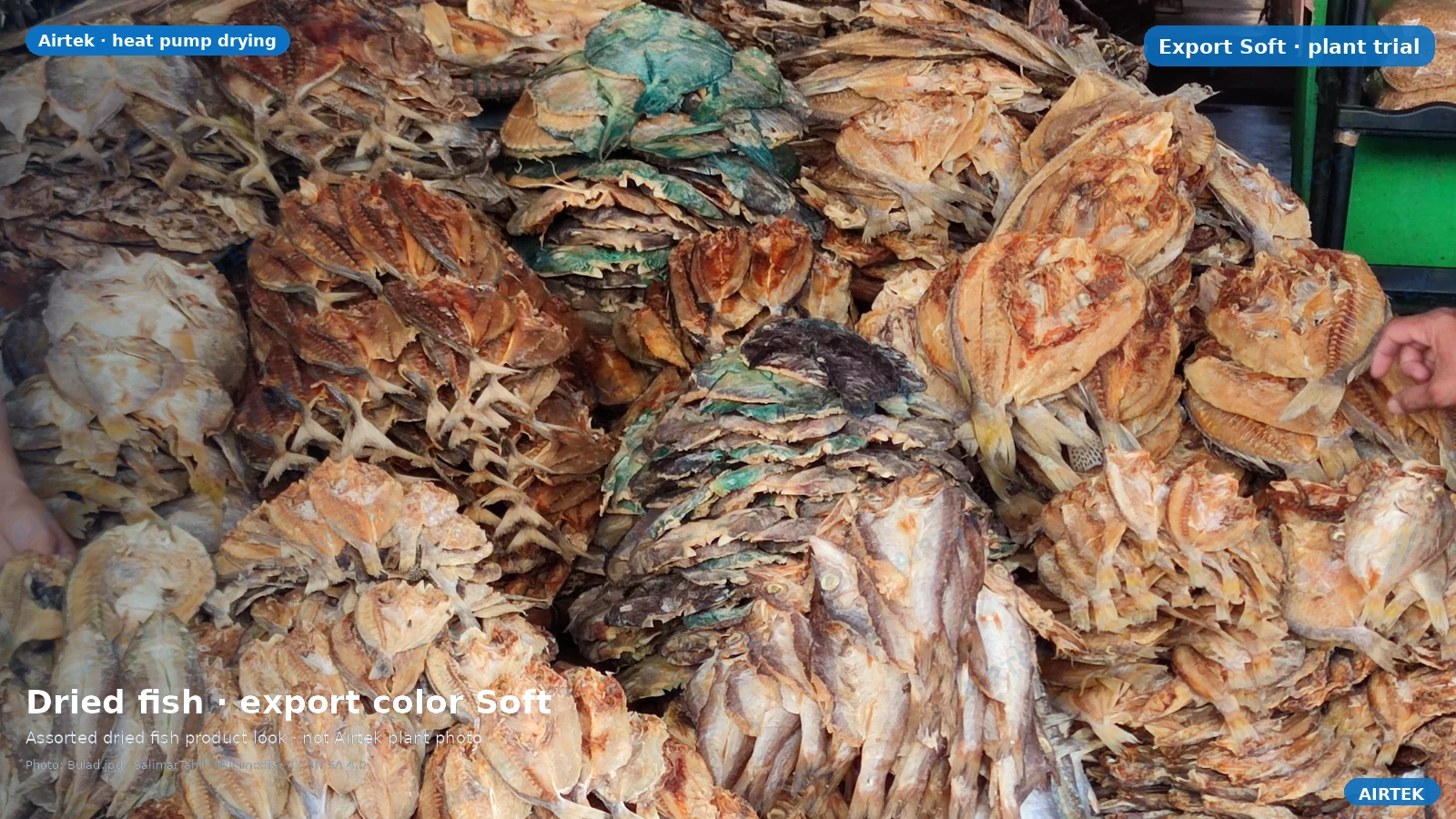
What “export color & flavor” means for dried fish buyers (Soft)
“Export grade” is not one lab number on a blog. In practice, buyers talk about:
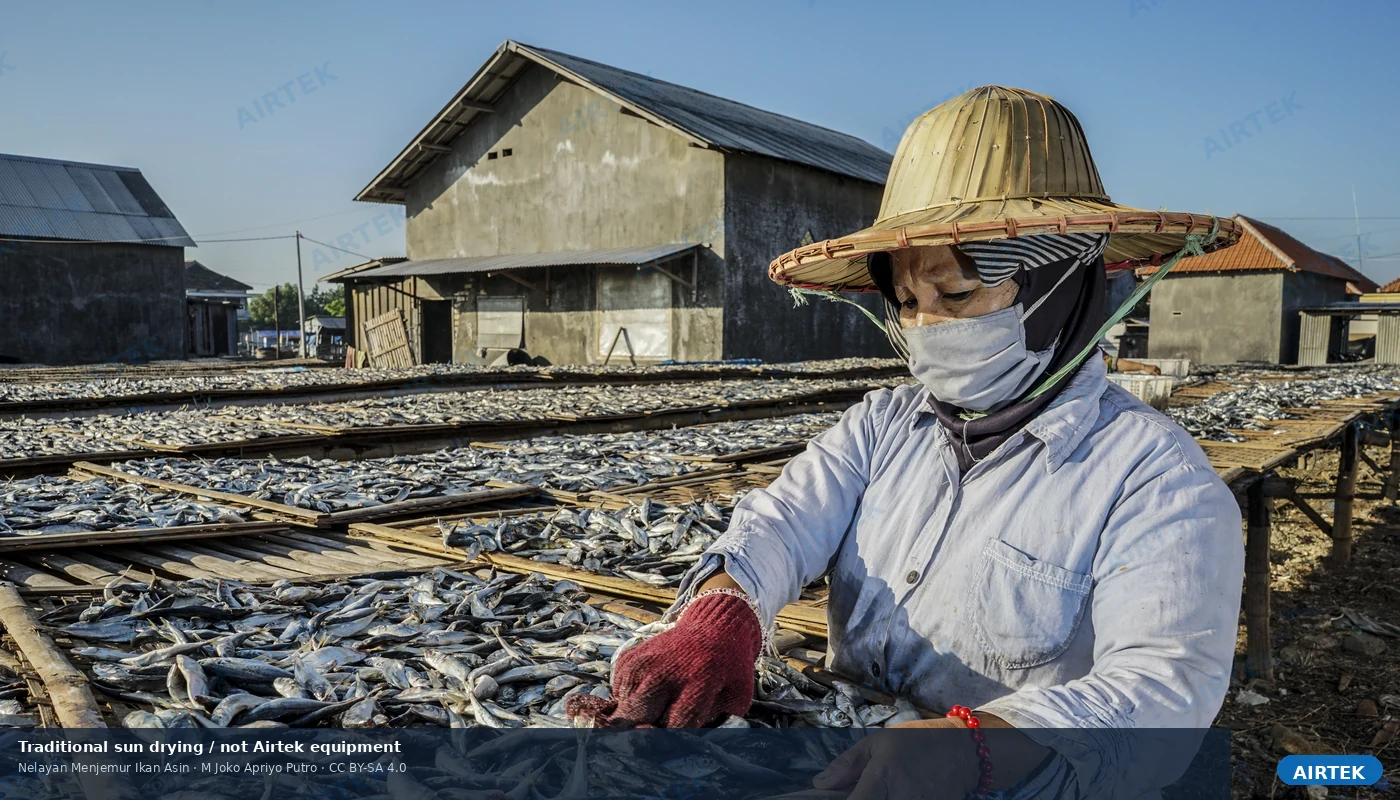
- Color stability — avoiding dark, scorched, or uneven browning that reads as overheated or poorly controlled drying
- Flavor Soft — keeping the fish taste story without “cooked-out” or yard-smoke notes from uncontrolled open drying
- Surface uniformity — fillets or small whole fish that look consistent across a carton, not tray-edge dry and center wet
- Hygiene narrative — enclosed chamber vs open sun yards (dust, insects, rain re-wetting)
None of these replace your buyer COA or destination market rules. They do explain why many plants move from sun yards or harsh hot rooms toward heat-pump food dehydrators with staged temperature and humidity control.
Pretreatment Soft checklist (what RFQs should describe)
Drying cannot fix a weak pretreatment story. When you inquire, describe—not invent numbers for—the steps your line already runs:
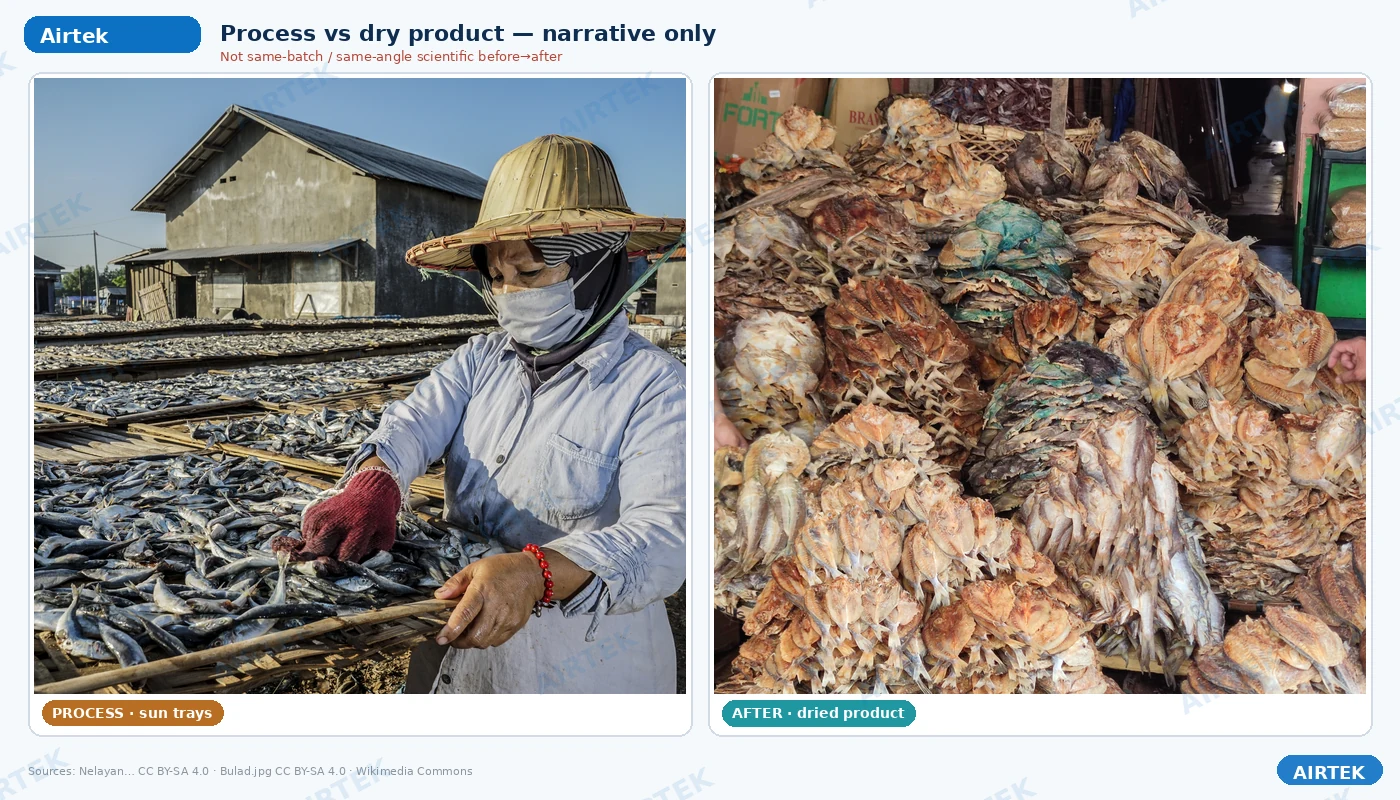
- Species and cut — small whole, split, fillet, salted vs lightly salted
- Gutting / cleaning Soft — how you define “ready for tray”
- Salting or brining Soft — whether salt is part of the product identity (confirm targets with your SOP and buyer)
- Thickness / piece size — the main driver of evenness risk
- Drain / drip Soft — how much free surface water enters the chamber
- Target finish Soft — pack moisture or water-activity language your QC uses (do not invent a blog % here)
Soft rule: blog copy does not publish process recipes. Your plant trial and buyer COA do.
Heat-pump Soft levers: T/RH questions, airflow, hygiene vs open sun
A heat-pump loop typically condenses moisture from circulating air and returns warmer, drier air to trays or trolleys. For dried fish, the useful buyer questions are:
- Which temperature and humidity stages protect color early, then finish to pack-ready dryness?
- How even is airflow across loaded trays (edge vs center)?
- Can operators document a repeatable recipe across shifts?
- How does enclosed drying compare to your current sun / hot-room hygiene risk?
Related Soft reading: low-heat food dehydrator process FAQ for humidity-aware questions, and batch vs continuous heat pump dryer when form and volume push cabinet vs belt.
We do not lock °C/RH tables or energy multiples in this article. Those belong in project estimates after you share species, piece geometry, and pack targets.
RFQ checklist for fish plants
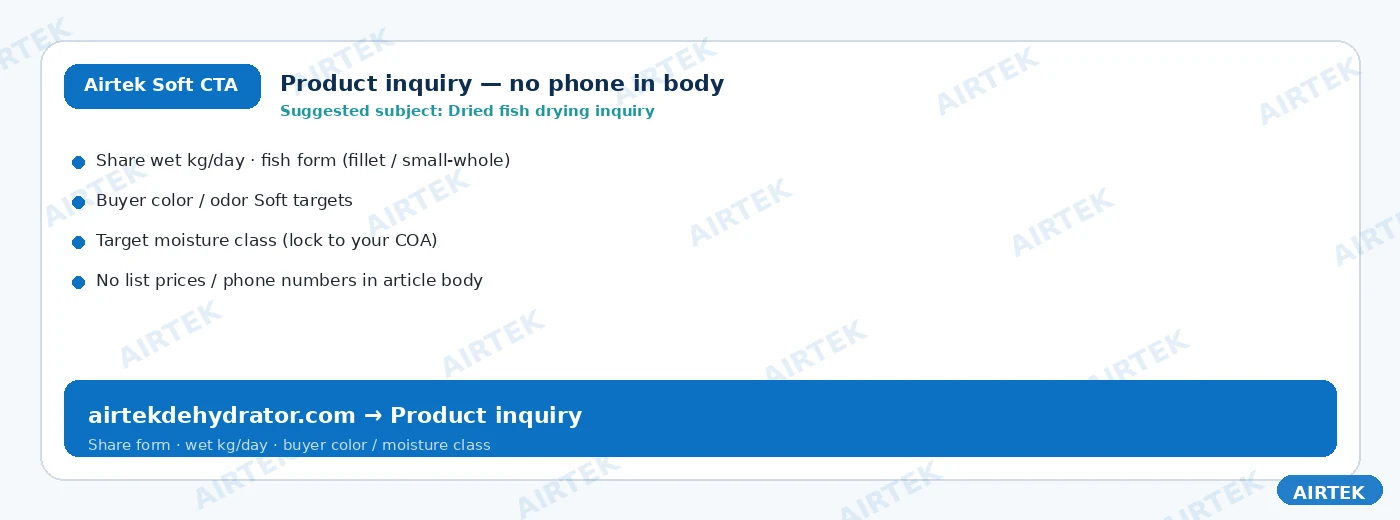
Use this list when you request an Airtek estimate:
| RFQ field | Why it matters |
|---|---|
| Species + market name | Color/flavor Soft expectations differ by fish |
| Form (fillet / split / small whole) | Loading and evenness |
| Salt / brine Soft description | Product identity + finish behavior |
| Typical wet batch Soft (kg/day range OK Soft) | Cabinet vs continuous conversation |
| Pack moisture / Aw Soft (your QC language) | Finish criterion |
| Hygiene / export destination Soft | Documentation conversation |
| Site power Soft (voltage / phase) | Utilities fit |
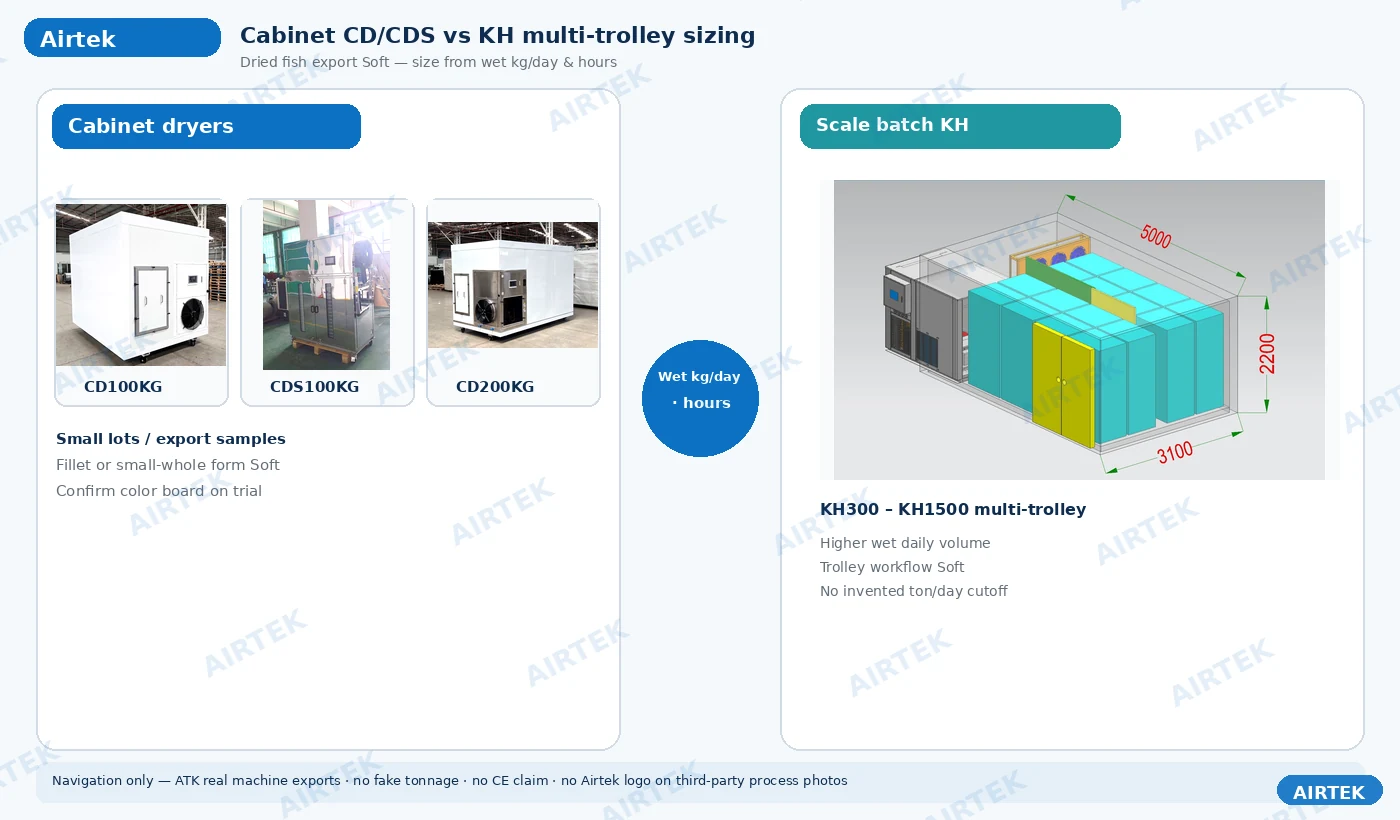
| Preference Soft: cabinet trays vs belt | Points to selection, not a fake tonnage claim |
Optional Soft: ask for sample drying photo pairs (wet→dry) from comparable projects when available—do not assume a public B/A gallery already covers your species.
When to ask cabinet vs belt (Soft pointer)
This article stays on export quality + RFQ. Form and throughput still matter:
- Batch cabinet trays often fit graded lots, R&D, or multi-SKU fish days — see cabinet food dryer.
- Belt / continuous fits more uniform, higher-flow forms when your line is ready — see conveyor belt dryer and G3 above.
For squid rings/sheets specifically, see the dedicated Soft selection post: dried squid cabinet vs belt (when live).
Soft FAQ
Q1. Can heat-pump drying help export dried fish color?
It supports a Soft conversation about staged air and humidity versus uncontrolled sun or harsh blast heat. Exact color outcomes depend on species, salt, and loading—confirm on trial.
Q2. Do you publish a standard moisture % for dried fish?
No. Finish targets follow your buyer COA and pack plan. Share your QC language in the inquiry.
Q3. Is this the same as older fish dryer blog posts on the site?
No. This is a 2026 Soft export-quality + RFQ page. Older machine-oriented posts remain useful satellites (see related reading).
Q4. What should we send to start an estimate?
Species, form, Soft batch range, salt Soft description, pack target Soft, and site power—via product inquiry.
Related reading Soft
- Satellite (older color theme): retain color and flavors fish dehydrator
- Satellite (older machine / cuttlefish near-neighbor): heat pump fish dryer machine
- Technique hub Soft: fish drying technique
- Machine hub: heat pump food dryer machine
Next step: share your RFQ fields and request a project estimate. Soft claims only—Airtek, not a price list.