
Dried Squid Rings & Sheets: Cabinet vs Belt Heat-Pump Soft Guide
Squid plants rarely fail an RFQ because they forgot a brand adjective. They fail it when product form and dryer architecture talk past each other—rings on a story written for sheets, or a continuous belt pitch where graded batch lots still rule the day. This Soft guide compares cabinet vs belt heat-pump options for dried squid, without inventing tonnage or belt speeds.
Airtek builds heat pump food dryer systems for commercial food lines. Soft claims only. When you are ready: product inquiry.
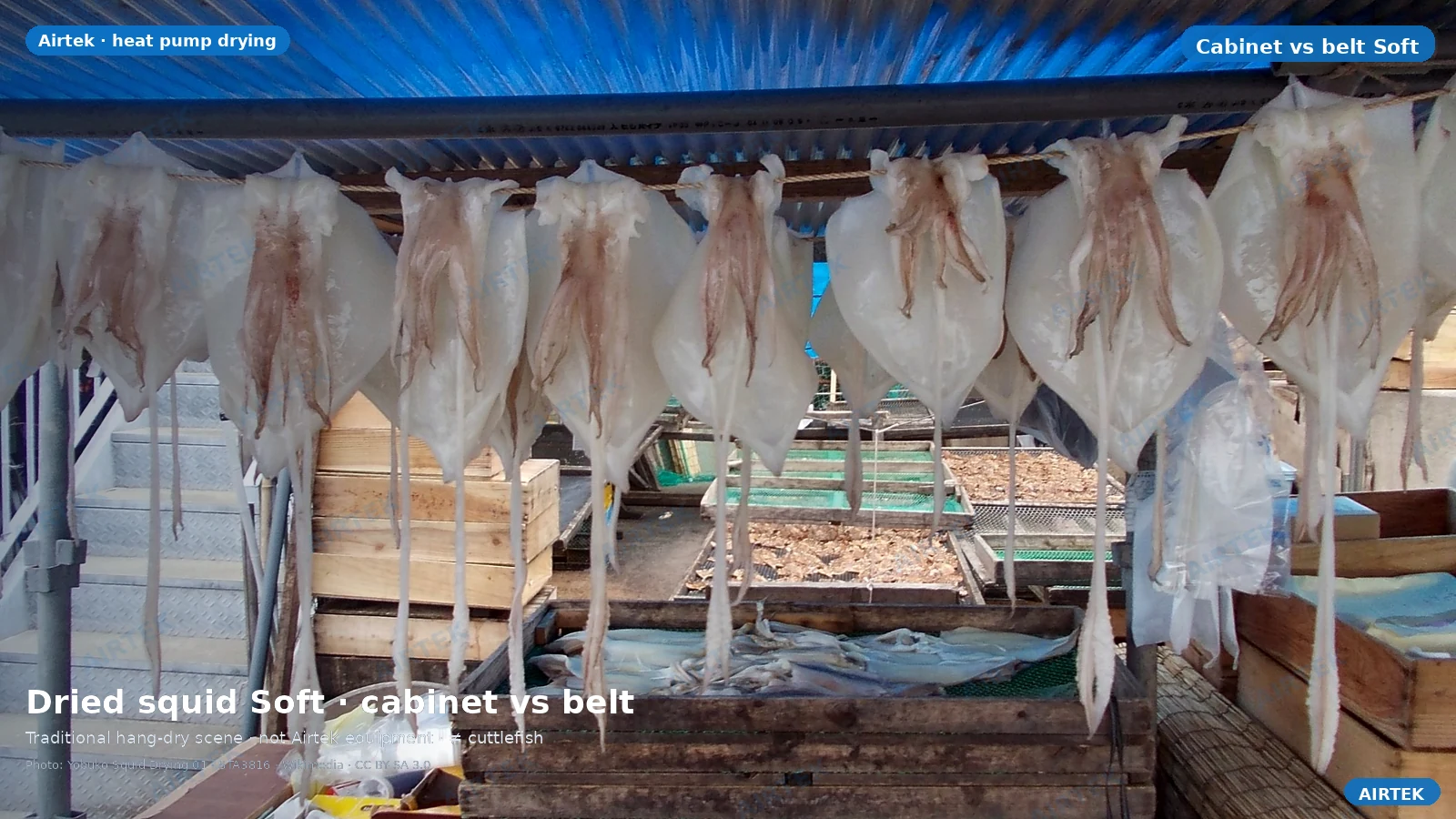
Product forms Soft → why form drives dryer type
Name the form before you name the machine:
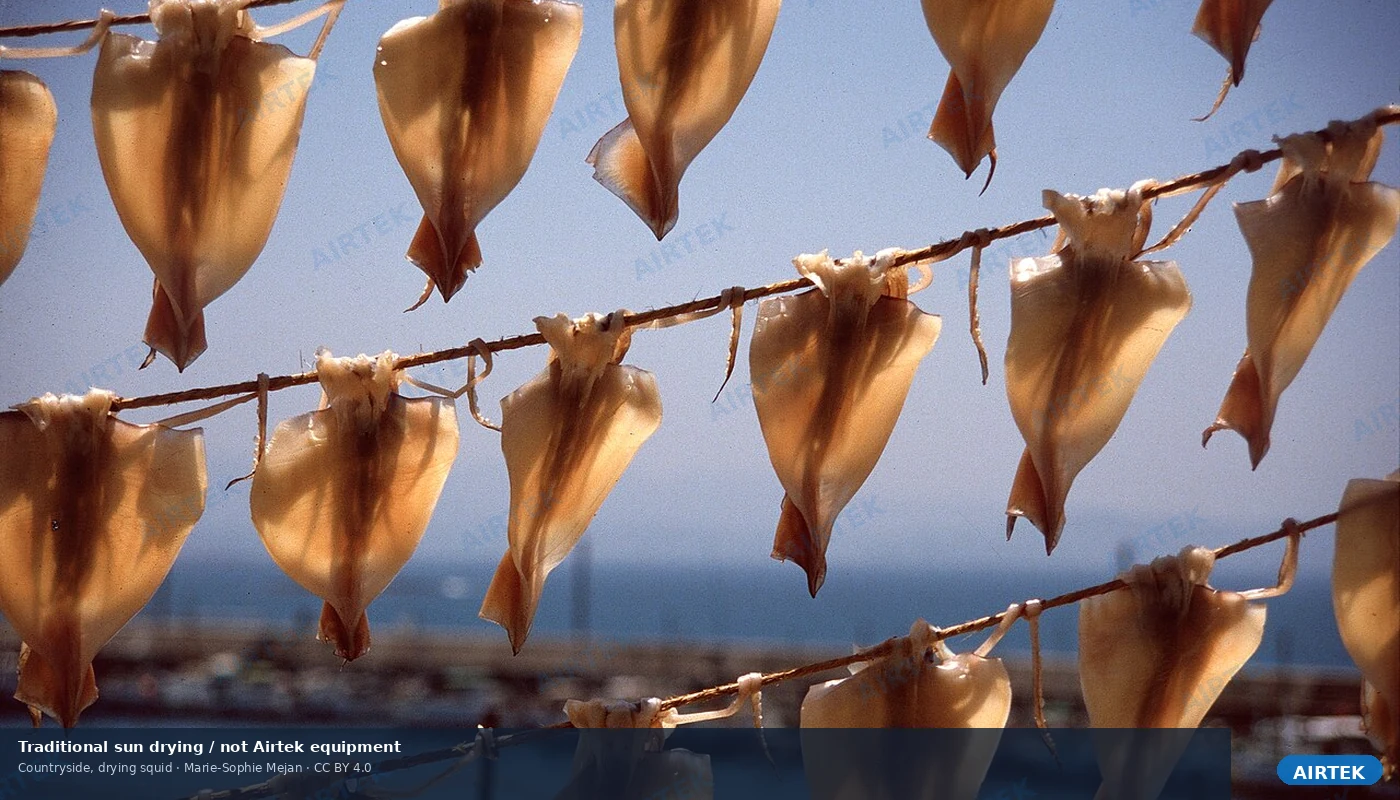
- Rings — relatively uniform pieces; belt Soft conversation appears earlier
- Sheets / fillets Soft — flat geometry; tray evenness Soft matters
- Strips / scored Soft — edge drying Soft risk
- Whole small Soft — thickness variation Soft; often batch-friendly
Form is the bridge to batch vs continuous (G3 Soft). This page lands that framework on squid, not generic fruit chips.
Near-miss note Soft: an older fish dryer post mentions cuttlefish in passing. That is not this squid Soft selection page. Satellite only if useful: heat pump fish dryer machine.
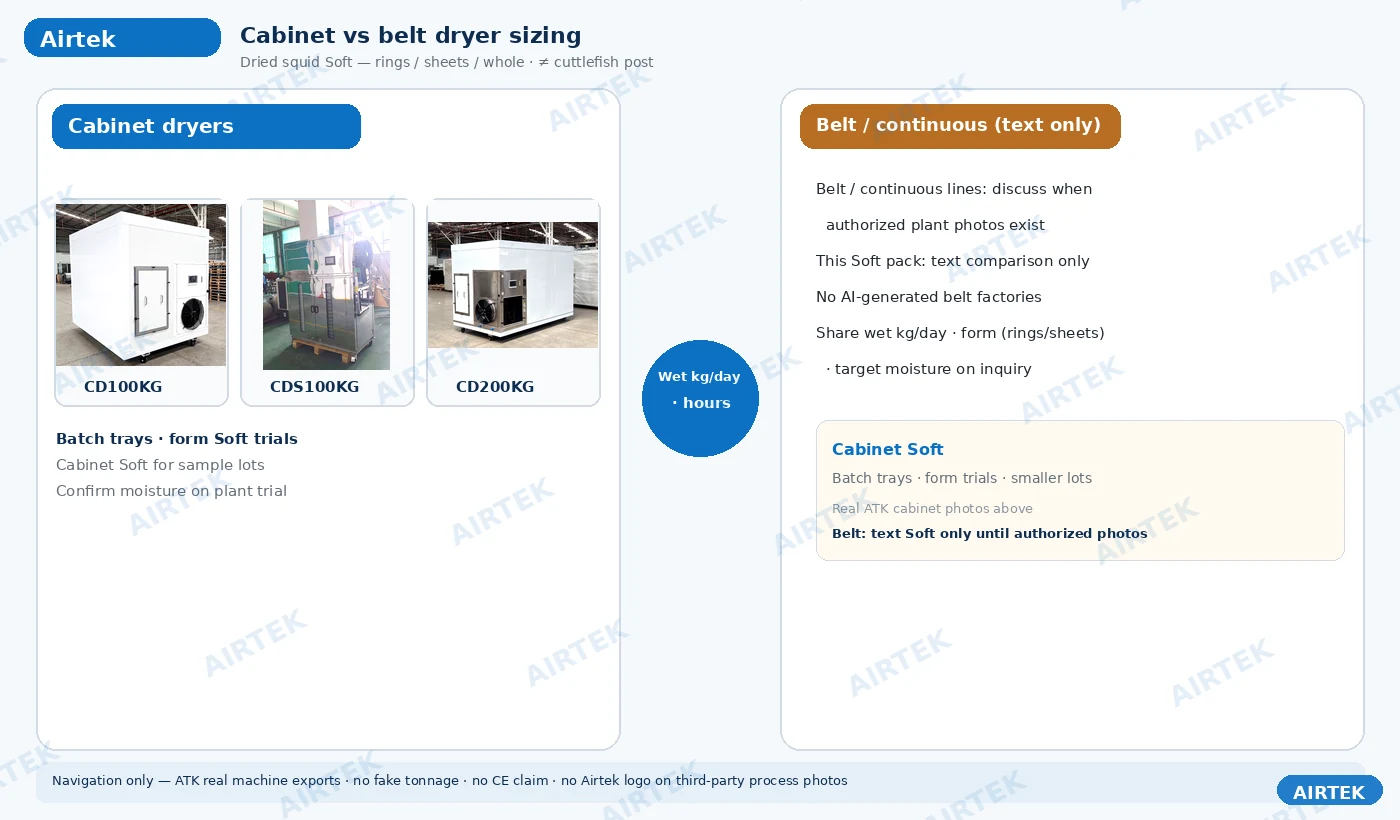
Cabinet Soft fit (batch trays / trolleys)
Cabinet food dryers usually fit when you need:
- Graded lots and multi-SKU squid days
- R&D or export sample Soft batches
- Tight Soft control of tray recipes across shifts
- Mixed thickness that would fight a single belt Soft story
Soft questions for cabinet RFQs: tray count Soft language, loading density Soft (not invented kg/m²), and how operators rotate or rest Soft if your SOP uses rests.
Belt / continuous Soft fit
Conveyor belt dryers enter the Soft conversation when:
- Form is relatively uniform (often rings)
- Line flow Soft prefers continuous handling
- Labor Soft wants less tray handling at higher Soft throughput
Soft questions: feed Soft consistency, belt Soft staging vs temperature Soft stages, and what happens when a SKU changeover Soft arrives. Do not invent belt m/min or ton/day in blog copy—those belong in project estimates after you share form and Soft daily range.
If you lack authorized belt-line photos, keep comparison textual—never AI-generate a fake production line for hero use.
Shared Soft process questions (no fake tonnage)
Regardless of cabinet or belt, squid buyers usually ask:
- How do we protect color Soft without harsh blast Soft early?
- How even is dryness across edge vs center?
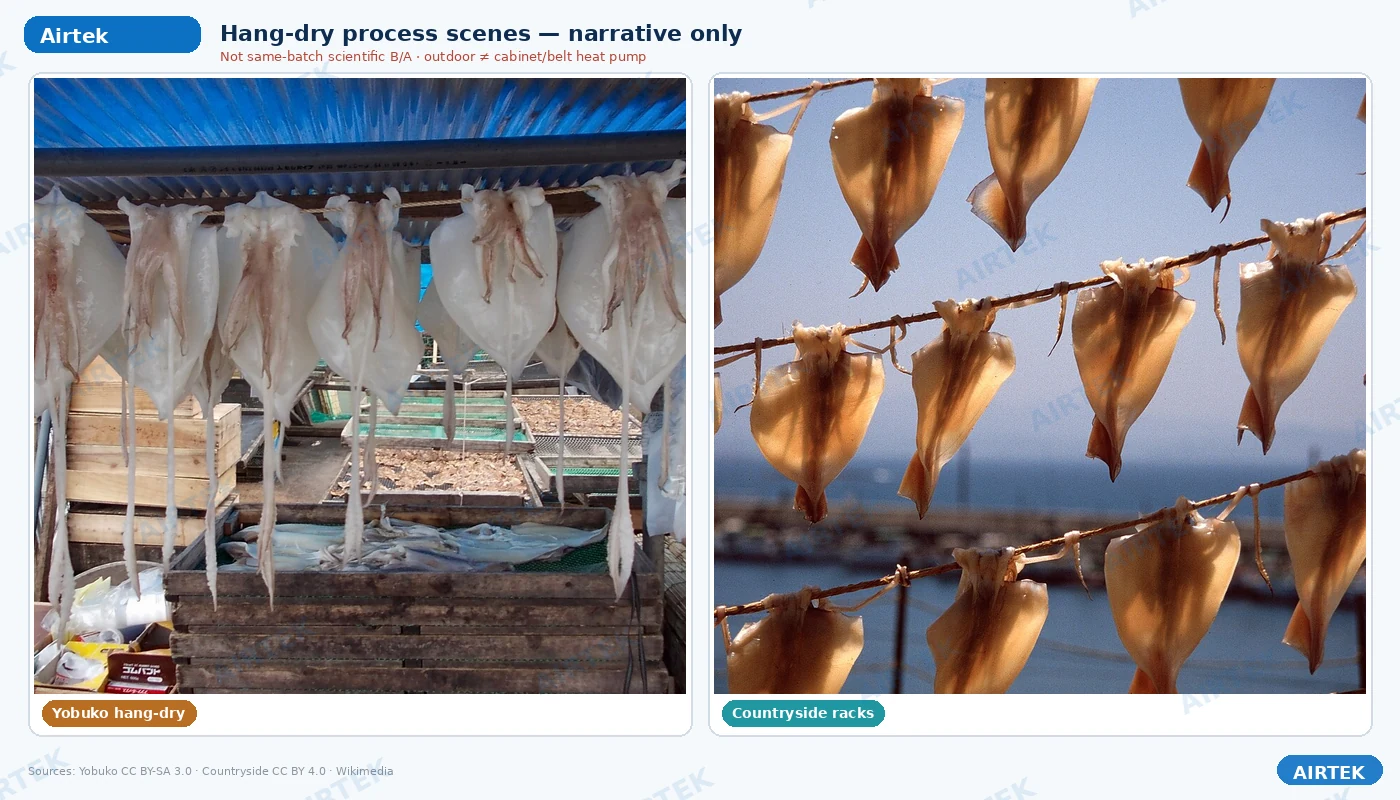
- What hygiene Soft story replaces open sun Soft?
- How do we document recipes for export Soft cartons?
- When does low-heat process FAQ language apply to aroma Soft?
Related Soft energy framing (not a payback claim): heat pump vs hot air.
Qualitative decision table Soft
| Soft signal | Leans cabinet Soft | Leans belt Soft |
|---|---|---|
| Form variety / graded lots | Strong | Weak |
| Uniform rings, steady Soft flow | Weak | Strong |
| Sample / export trial Soft days | Strong | Possible later |
| Labor Soft prefers trays | Strong | — |
| Labor Soft prefers continuous feed | — | Strong |
| Need invented ton/day Soft | Neither — ask via inquiry | Neither |
This table is qualitative Soft—not a sizing calculator.
How to run a Soft selection conversation with engineering
Bring three Soft artifacts to the call—not a wish list of brand adjectives:
- Form board Soft — photos of rings vs sheets vs strips as you actually pack them
- Day Soft rhythm — whether lots arrive graded and staggered, or as a steady Soft feed
- QC Soft language — how you currently reject uneven dryness or color Soft issues
Then ask architecture questions in this order:
- Does our Soft day look more like batch recipes or continuous Soft feed?
- Where do changeovers Soft hurt us today (labor Soft, scrap Soft, hygiene Soft)?
- What utilities Soft (power Soft, floor Soft, condensate Soft drain Soft) constrain cabinet vs belt?
- Which Soft risks matter more this quarter: sample agility Soft or steady Soft flow?
Airtek will still need Soft daily wet range and pack targets before any estimate. The goal of this page is to stop cabinet-vs-belt debates that never name the squid form.
Pretreatment Soft pointer (not a full RFQ essay)
Squid Soft pretreatment (clean Soft, score Soft, salt Soft if used, drain Soft) belongs in your SOP and in the inquiry notes. This Soft selection page does not republish a pretreatment novel—see fish Soft RFQ tone on export dried fish when you need checklist Soft depth for seafood Soft quality asks.
Soft FAQ
Q1. Is cuttlefish the same as squid for dryer selection?
Related Soft family, different Soft geometry and buyer language. This page is squid-first. Do not reuse a cuttlefish in-process photo as a squid B/A proof.
Q2. Can you publish our ton/day Soft here?
No. Share Soft daily wet range and form in product inquiry; estimates follow assumptions you approve.
Q3. Do we need both cabinet and belt?
Some plants Soft-start on cabinet, then Soft-add continuous later. Many never need both. Form and Soft volume decide—not a blog upsell script.
Q4. What photos help an estimate?
Real wet→dry pairs of your squid form Soft when available; tray Soft loading Soft photos. Placeholders stay until plant shots exist.
Related reading Soft
- G3: batch vs continuous heat pump dryer
- Cabinet food dryer · Conveyor belt dryer
- Hub: heat pump food dryer machine
- Optional satellite: older fish dryer post (cuttlefish ≠ this page)
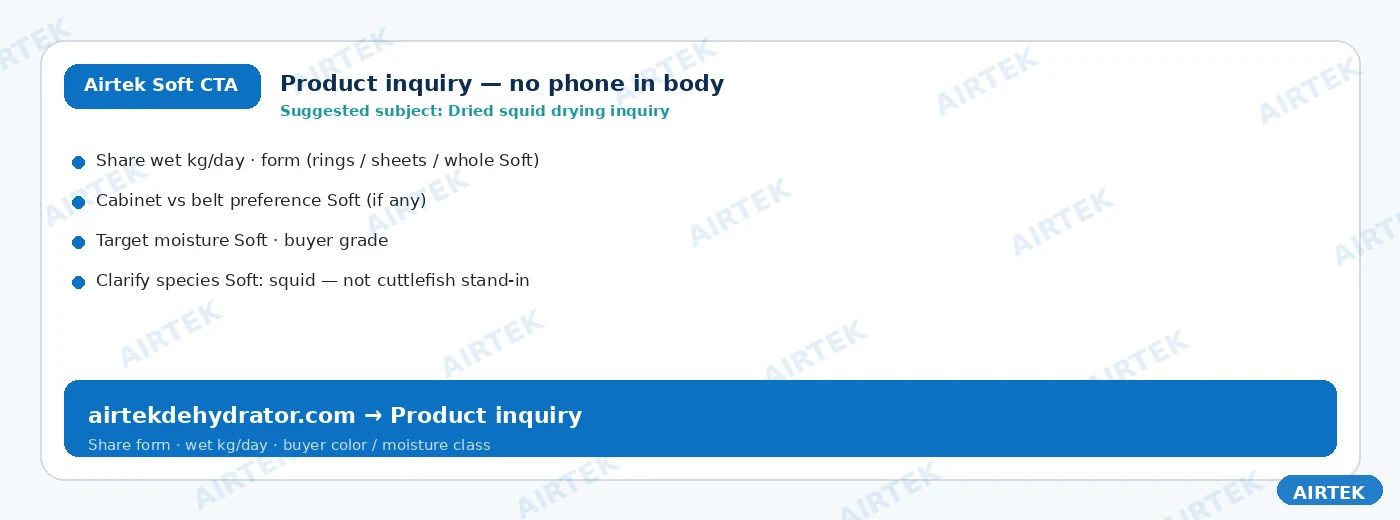
CTA: Request an Airtek project estimate—tell us rings, sheets, or strips Soft first.