
Dried Shrimp Meat (Not Paste): Heat-Pump Drying Soft RFQ Checklist
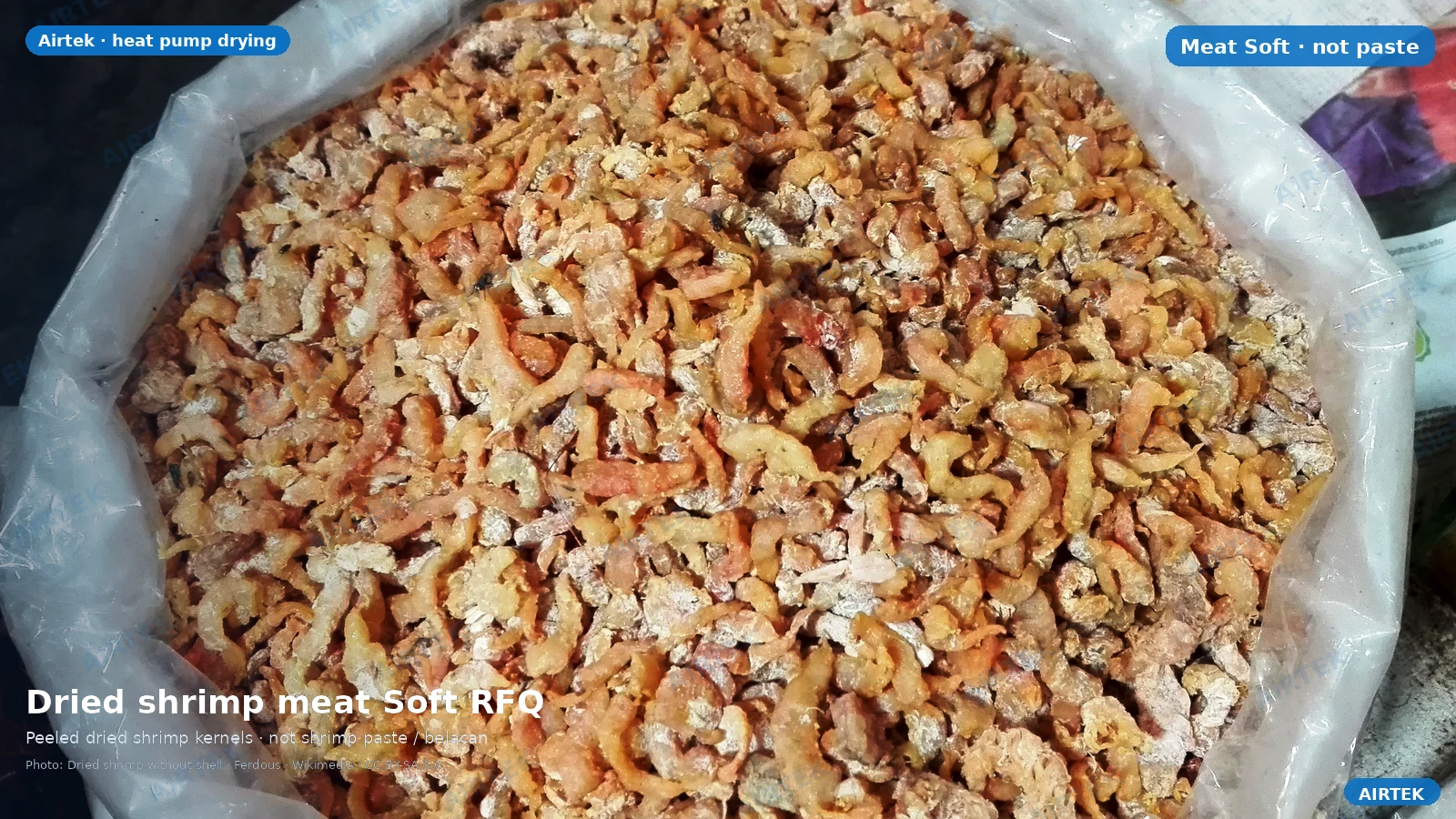
Callout — product boundary: This page is about dried shrimp meat (peeled shrimp / shrimp kernels / shrimp pieces for food plants). It is not about fermented belacan / terasi / shrimp paste. For paste drying Soft, see Belacan shrimp paste heat-pump drying.
Processors searching “dried shrimp dryer” usually need two things: a clear pretreatment story and a clean RFQ so an estimate is not a guessing game. This Soft checklist helps peel-and-dry plants talk to equipment teams without inventing cook times, salt percentages, or finish moisture numbers.
Airtek builds heat pump food dryer chambers for commercial food lines. Soft claims only—no CE numbers, list prices, fake capacity, or named customers. Start here: product inquiry.
Dried shrimp meat ≠ belacan / shrimp paste
| Dried shrimp meat (this page) | Belacan / shrimp paste | |
|---|---|---|
| Form | Peeled whole, split, pieces, or powder pathway | Fermented salted paste / cake |
| Process Soft | Cook/peel/salt/drain → dry | Ferment + pound + dry Soft |
| Buyer risk Soft | Even dryness, color, hygiene | Odor Soft, salt Soft, mold Soft |
| Site article | This RFQ guide | Belacan post |
If your SKU is paste, stop here and use the belacan guide. If your SKU is meat, keep reading.
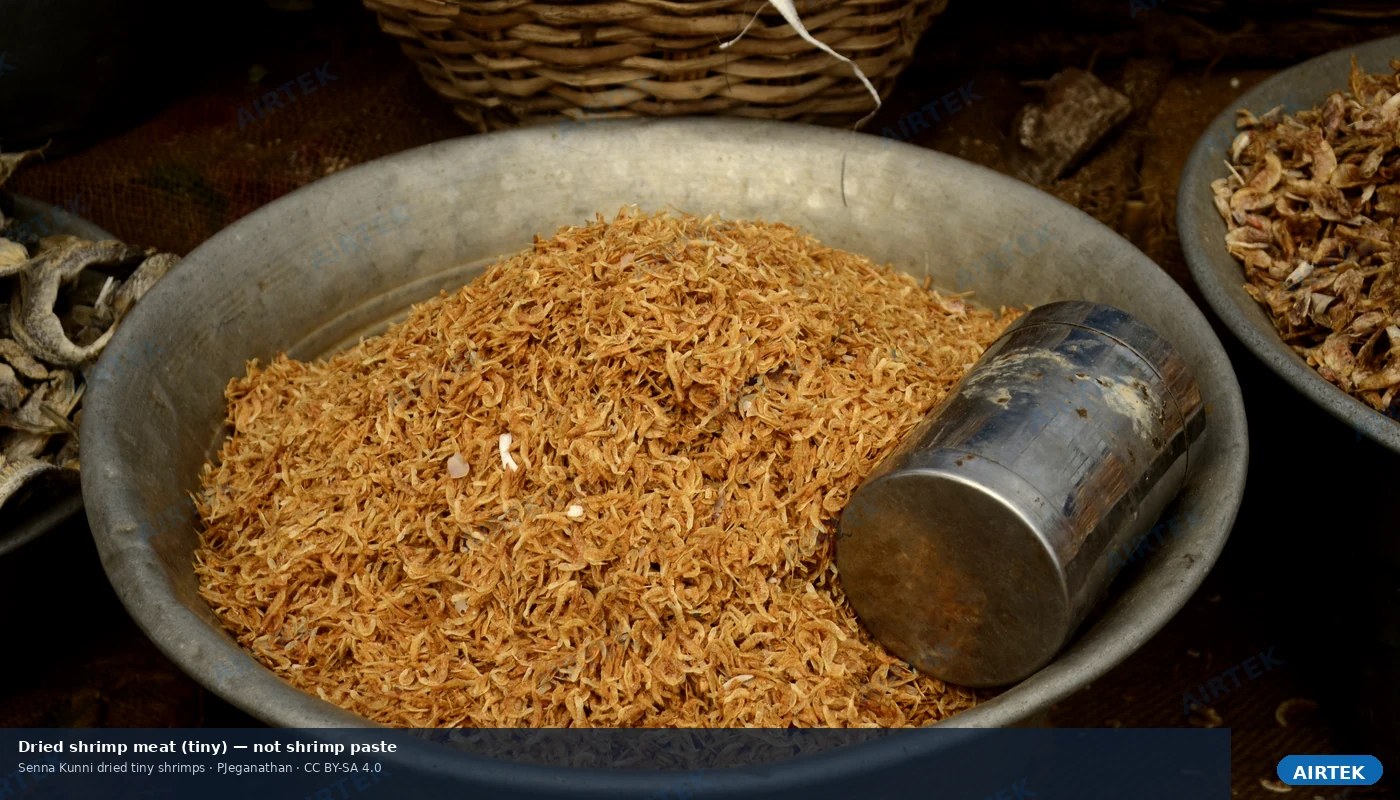
Pretreatment Soft: what your RFQ should describe
Drying quality tracks pretreatment more than brochure adjectives. Describe these Soft items (do not invent values for the blog):
- Peel state — hand/machine peeled; shell-on Soft only if that is truly your product
- Cook Soft — whether a cook step exists before drying (time/temp belong in plant SOP, not this page)
- Salt Soft — dry salt, brine, or unsalted pathway; buyer destination Soft
- Drain / spin Soft — free water load entering trays
- Grade Soft — size bands that change tray loading
- Target finish Soft — pack moisture / Aw language your QC uses
Soft note: cook minutes, salt %, and endpoint moisture are plant-trial / COA topics. They stay off this Soft page as hard numbers.
Product forms Soft (peeled whole, split, powder)
Form drives loading and evenness conversations:
- Peeled whole / kernels — tray density and airflow Soft
- Split / butterflied — more surface area; watch edge over-dry Soft
- Pieces for seasoning — uniformity Soft across a lot
- Powder pathway Soft — usually dry first, then mill; milling is not this dryer brief
Mention form clearly in inquiry so cabinet tray talk does not get confused with paste-cake loading from the belacan world.
Heat-pump Soft controls (even drying, hygiene vs sun)
A heat pump food dehydrator typically condenses moisture from circulating air and returns warmer, drier air to the product. For shrimp meat, Soft buyer questions include:
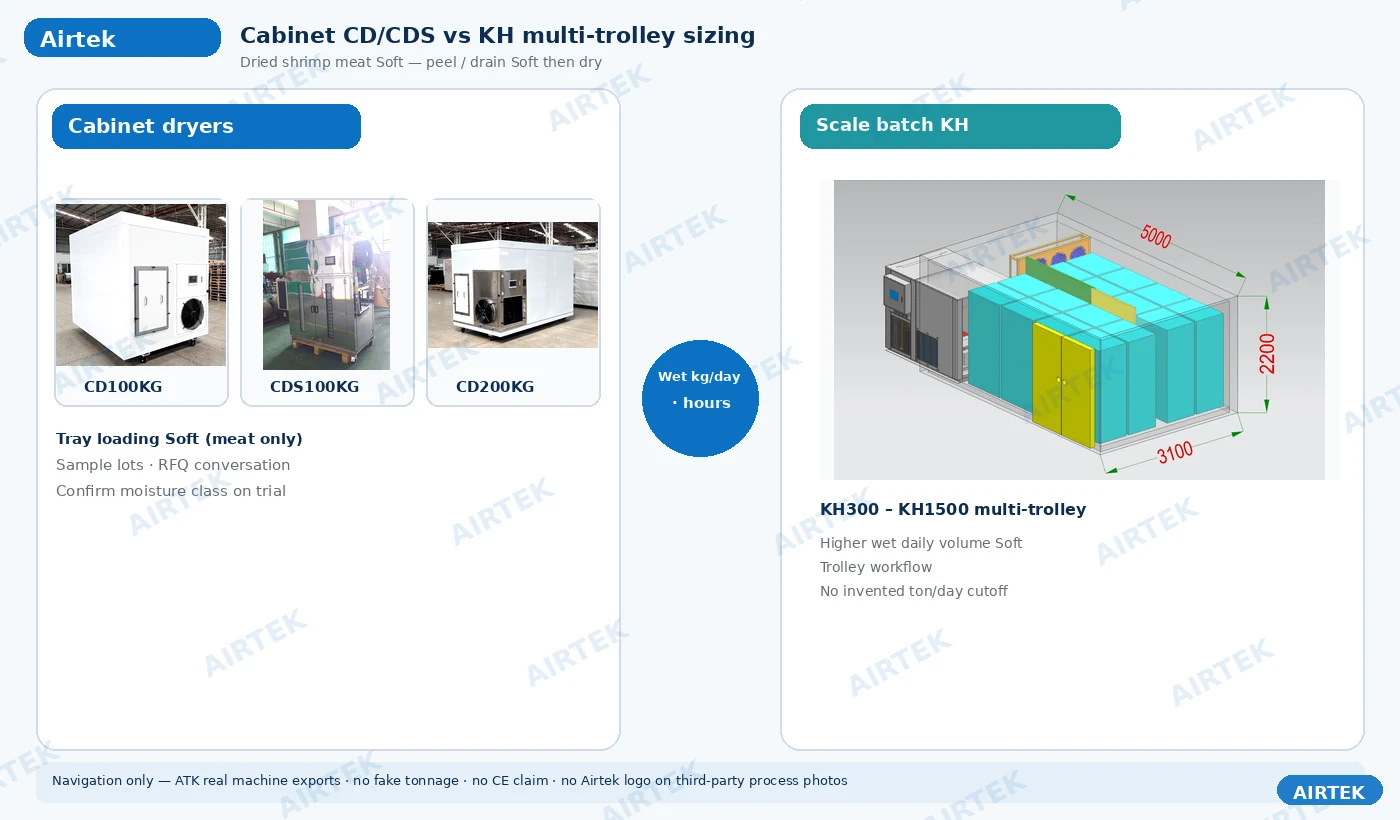
- How do we stage air so pieces dry evenly without case-hardened shells and wet cores?
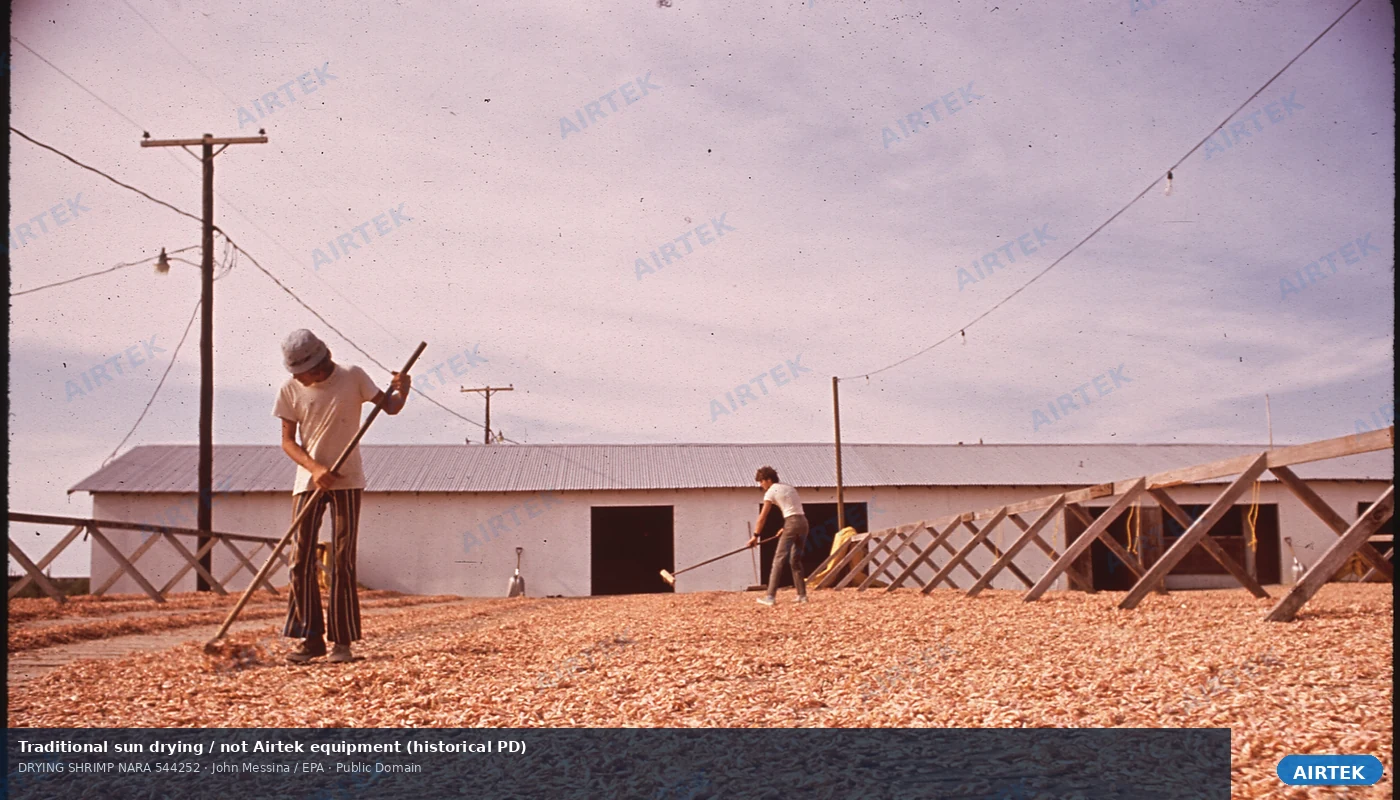
- How do we document hygiene versus open sun yards (dust, insects, rain)?
- Which cabinet envelope fits graded lots — see cabinet food dryer?
- When does Soft energy framing matter — see energy saving vs hot air?
This page does not publish °C tables, kWh guarantees, or ton/day claims.
Full RFQ field list (dried shrimp meat)
Copy into your inquiry:
- Confirm meat, not paste (and link destination market Soft)
- Species / market name Soft
- Form: peeled whole / split / pieces / powder pathway Soft
- Pretreatment Soft: peel / cook Soft / salt Soft / drain Soft
- Wet Soft throughput (daily range language OK Soft)
- Pack moisture / Aw Soft (your QC words)
- Color Soft expectations (buyer photo Soft if any)
- Site utilities Soft (voltage / phase)
- Preference Soft: batch cabinet vs other (selection later)
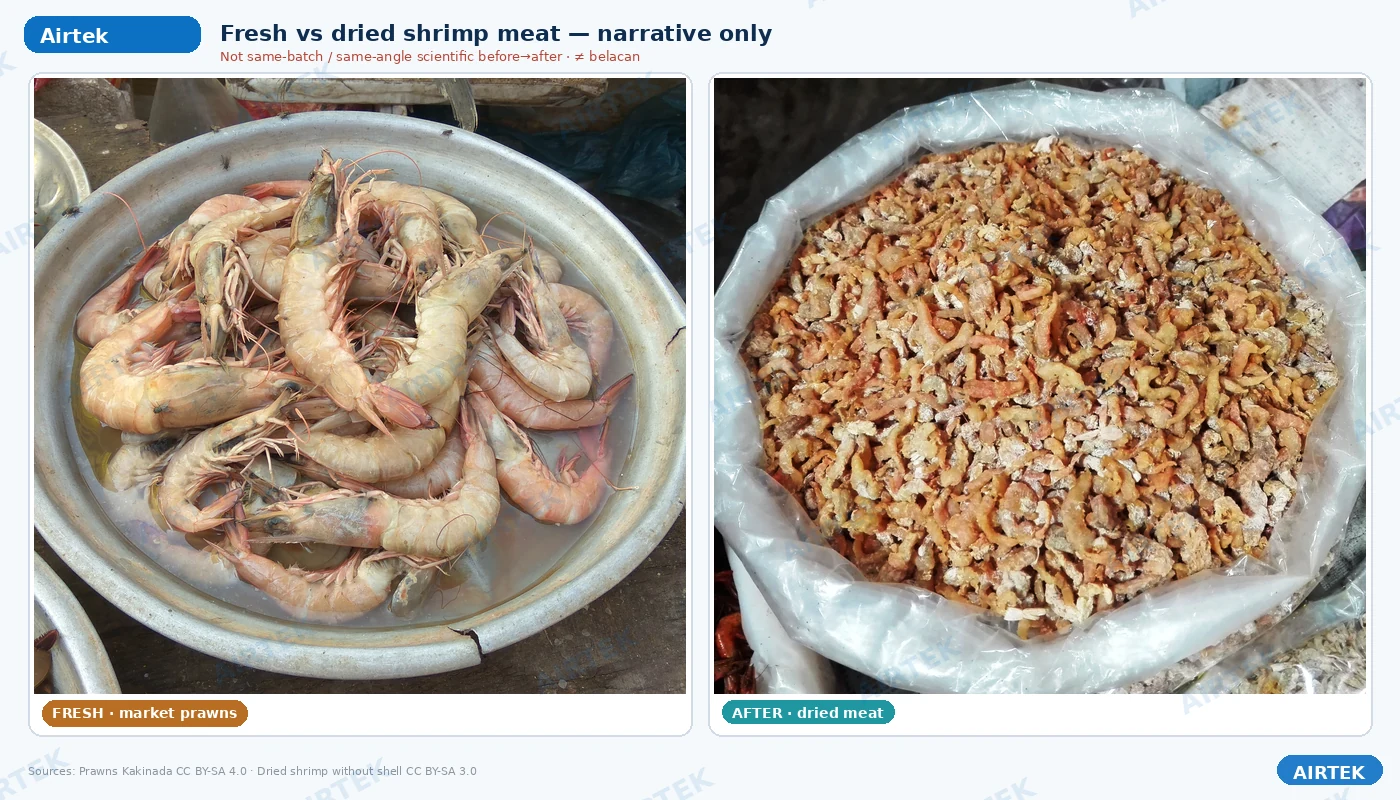
- Whether you need wet→dry sample photo Soft for internal review
Related Soft seafood RFQ tone: export dried fish quality Soft when live.
Hygiene Soft: what buyers usually ask beyond “can it dry?”
Export and modern retail conversations often move past raw throughput into traceable chamber conditions:
- Can operators record stage Soft setpoints without rewriting folklore each shift?
- How do you keep foreign matter Soft risk lower than open yards?
- What happens on rainy weeks when sun calendars slip?
- How do you separate allergen / shell Soft housekeeping from paste lines if both exist in one plant?
Heat-pump chambers do not replace GMP paperwork. They do give a Soft frame for enclosed air, condensate drain Soft, and recipe documentation—useful when a buyer asks how you dry shrimp meat when weather fails.
If your plant also runs fermented paste, keep dedicated Soft SOPs and do not assume one tray loading story covers both SKUs. Link the paste team to the belacan guide and keep this RFQ focused on meat.
Soft FAQ
Q1. Can the same dryer run belacan paste and dried shrimp meat?
Possibly as equipment Soft, but processes and loading differ. Do not copy paste recipes onto meat SKUs. Separate RFQs keep estimates honest.
Q2. Do you guarantee a cook-and-dry time?
No Soft blog guarantees. Share your pretreatment Soft and pack target; trial setpoints follow.
Q3. Why not sun drying?
Many plants still use sun for cost Soft. Enclosed heat-pump drying is a hygiene and weather-independence conversation—not a claim that sun never works.
Q4. Where do we start?
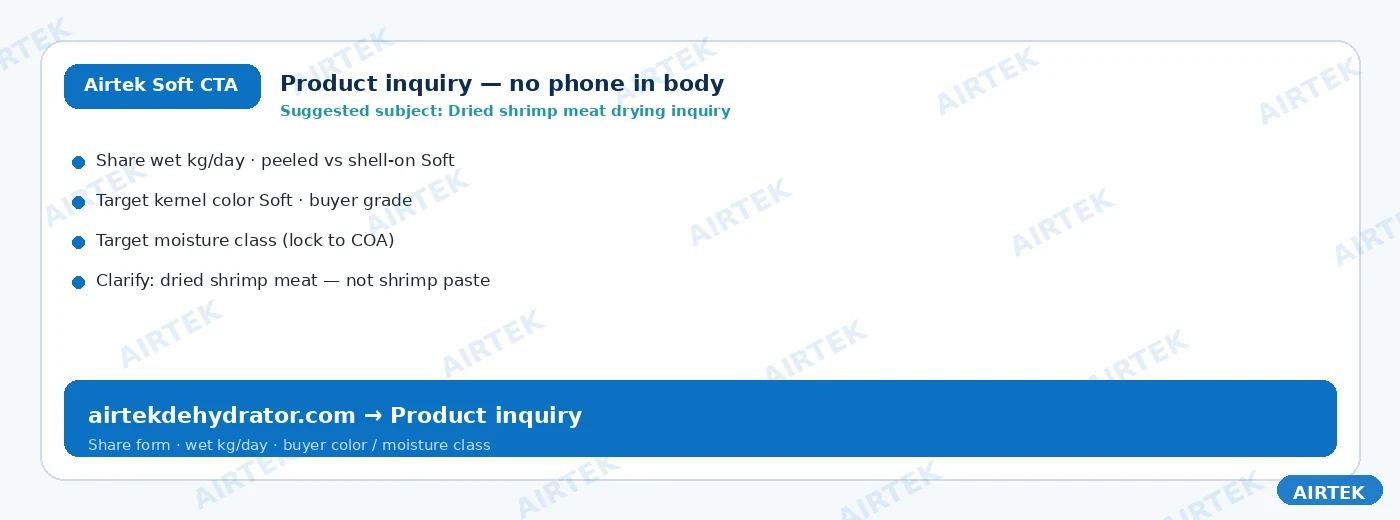
Send the RFQ list above via product inquiry.
Related reading Soft
- Must-read boundary: Belacan / shrimp paste heat-pump drying
- Hub: heat pump food dryer machine
- Soft energy: heat pump vs hot air
- Cabinet Soft: cabinet food dryer
CTA: Request an Airtek project estimate for dried shrimp meat—not paste.