
Heat Pump Dryer Machine


Heat Pump Food Dehydrator Machines for Commercial & Industrial Plants
Airtek builds commercial food dehydrators and industrial food dehydrators around a closed-loop heat pump food dryer core—batch tray cabinets and continuous mesh-belt lines for fruit, vegetables, herbs, meat, seafood, and similar agricultural products.
This hub is a machine navigation page: what buyers mean by commercial vs industrial, why heat-pump drying differs from open hot-air Soft, which architecture fits which plant, and what to send for a project estimate. Soft claims only—capacity and energy follow your wet infeed, target moisture, and site power.
Request a project estimate · Cabinet food dryer · Conveyor belt dryer
Buyer note: catalog bands and brochure kg figures are selection aids, not contract guarantees. We do not invent universal savings percentages or tonnage cutoffs. Validate with your mass balance and local tariffs.
What buyers mean by commercial vs industrial food dehydrators
Plant buyers often use these labels interchangeably—then clarify in the RFQ:
| Label buyers say | Typical conversation | Soft framing |
|---|---|---|
| Commercial food dehydrator | Steady business batches, multi-SKU seasons, export packs | Chamber / cabinet sized to wet kg and shifts—not a kitchen countertop |
| Industrial food dehydrator | Higher wet peaks, tighter utilities, continuous or multi-chamber layouts | Same food lock; more emphasis on hall power, labor rhythm, and redundancy |
| … machine modifiers | Spec sheets and title language | Use when comparing architectures, not as a separate product family |
Both paths stay food-locked: fruit, vegetables, herbs, meat, seafood, nuts—not laundry dryers, wood kilns, or sludge systems. If your inquiry mixes non-food materials, say so early so scope stays honest.
Why heat-pump (closed-loop) drying vs open hot-air
In many open hot-air rooms, heat leaves with moist exhaust. A heat pump food dehydrator typically cools process air so water condenses and drains, then returns warmer, drier air to the product. Buyers discuss kWh per kg of water removed under stated crop, loading, and climate assumptions—not a single marketing multiple.
Soft takeaway: heat-pump designs often win the humidity-control and recovered-heat conversation for commercial food plants; the right choice still depends on product, tariff, and existing boilers. Full buyer framework: Heat pump dryer energy saving vs hot air. For CapEx + OpEx framing vs resistance heat (no invented payback): Heat pump vs electric resistance TCO.
Batch tray / cabinet architectures
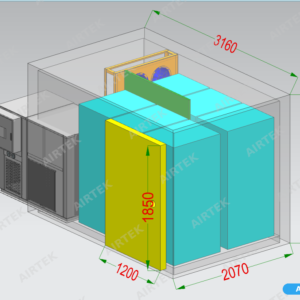
Batch / tray chambers (including compact cabinet food dryers) fit when:
- SKU mix changes often (fruit one week, herbs the next)
- Seasonal peaks need flexible batch sizes
- Operators load trolleys, run a recipe, unload, then change over
- Hall footprint favors closed modules over a long tunnel
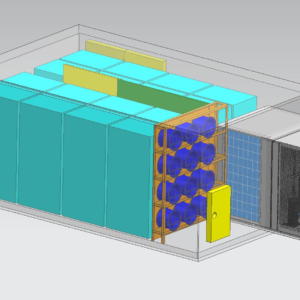
Trays and trolleys roll from prep to chamber. Recipe cards (temperature, humidity stages, tray map) become your plant library. Explore cabinet food dryer and the decision table in batch vs continuous heat pump dryer.
Continuous conveyor / mesh-belt lines
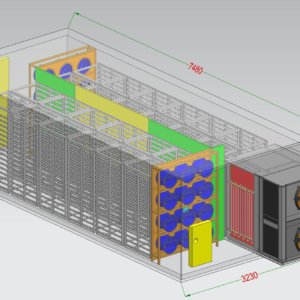
Continuous / mesh-belt lines fit when:
- The same thin geometry runs many hours at a stable wet kg/h
- Load/unload logistics can feed a belt continuously
- Changeovers are rare compared with throughput goals
Belt length, loading density, and zone recipes replace trolley counts. Many plants run a hybrid: batch chambers for specialty SKUs plus a belt for the hero product. Architecture detail: conveyor belt dryer machine · batch vs continuous.
How to brief a project estimate
Send what engineering actually uses—Soft prompts, not a price list:
- Crop list and form — slices, shreds, whole; peel / pulp if it changes wet mass
- Wet kg per batch or per day — peak vs average if harvest swings
- Initial and target moisture (say wet vs dry basis; Aw if your COA needs it)
- Hours / shifts available and preferred batch vs continuous narrative
- Site power — voltage, phase, available kW; hall height / footprint Soft
- Hygiene / export expectations — what auditors will walk through
Airtek maps those inputs to cabinet, multi-trolley chamber, or belt options according to project. Start here: product inquiry.
FAQ — commercial & industrial heat pump food dehydrators
Is a commercial food dehydrator the same as an industrial one?
Often the same hardware conversation with different emphasis. “Commercial” usually signals business batches and multi-SKU flexibility; “industrial” often signals higher wet peaks, tighter utilities, and continuous or multi-chamber layouts. Your wet kg, crop mix, and hall constraints decide the quote—not the label alone.
Do I need a heat pump, or will hot air do?
Depends on product, climate, and tariff. Heat-pump closed-loop designs usually improve the humidity and recovered-heat story; compare with kWh per kg water under your assumptions. See energy saving vs hot air.
How do I size without a fake tonnage cutoff?
Estimate water to remove from wet mass × moisture change, then match chamber or belt throughput and hours. Brochure kg bands are navigation aids. Method overview lives on this hub’s sizing sections and related capacity guides—confirm assumptions on inquiry.
Cabinet or continuous first?
Many plants prove recipes on a cabinet or batch chamber, then discuss continuous only if volume truly requires it. See batch vs continuous.
Where do I request an estimate?
Use the product inquiry form. Include wet kg, moisture targets, crop list, and power—no need for payment details.
Next step
Shortlist architecture (cabinet · batch chamber · belt), read the Soft energy and batch guides above, then submit your project data via product inquiry.
Airtek (Airtek Energy Systems Limited) — Guangzhou export plant · airtekdehydrator.com
Airtek Topline Food Drying Machines
Here are Airtek heat pump food drying machine capacity bands used as navigation aids on this hub. Exact sizing still follows wet infeed, target moisture, and hours available—share your crop list via inquiry rather than treating these bands as hard guarantees.




Your Expert Industrial Food Drying Machine Manufacturer
To Offer Direct Factory Price
- Sized for commercial food drying loads; public hub navigation currently lists bands from roughly mid-commercial chamber class toward larger project loads—treat as selection guidance, not a single capacity law
- Lower operating energy story vs many coal / oil / gas heating routes in comparable jobs—still validate with kWh per kg water and local tariffs, not a fixed “3×” guarantee
- Simple, largely automatic operation to reduce routine labor once recipes are locked
- Installation guidance plus use / operation training as scoped on the quotation
- More than 8 years of dryer production experience; products may be described as designed to meet European CE certification standards only as soft site wording—ask for verifiable documentation when required
- 12 months warranty period; accessories free during warranty as stated on current site materials
For crop-specific process thinking, start with banana and mango guides. For architecture choice, use batch vs continuous.
Talk to Airtek: Share your wet daily tonnage (or batch kg), crop list, target moisture, and power supply. We will help match a heat pump food dehydrator—cabinet, chamber, or belt—to your plant assumptions.
Product inquiry · info@airtekdehydrator.com
Address: No.18, Qidong Road, Huadong Town, Huadu District, Guangzhou City, China
About Airtek
Airtek (Airtek Energy Systems Limited; also ATK) is a Guangzhou-based manufacturer of industrial heat pump food dehydrators for fruit, vegetables, herbs, seafood, meat, nuts, and similar products. Closed-loop heat pump drying condenses moisture and recovers heat for the next pass. Capacity follows wet infeed, target moisture, and site hours—not a brochure sticker alone.