
Continuous Conveyor Belt Dryer (Mesh Belt Dryer)
≡ Large Processing Capacity
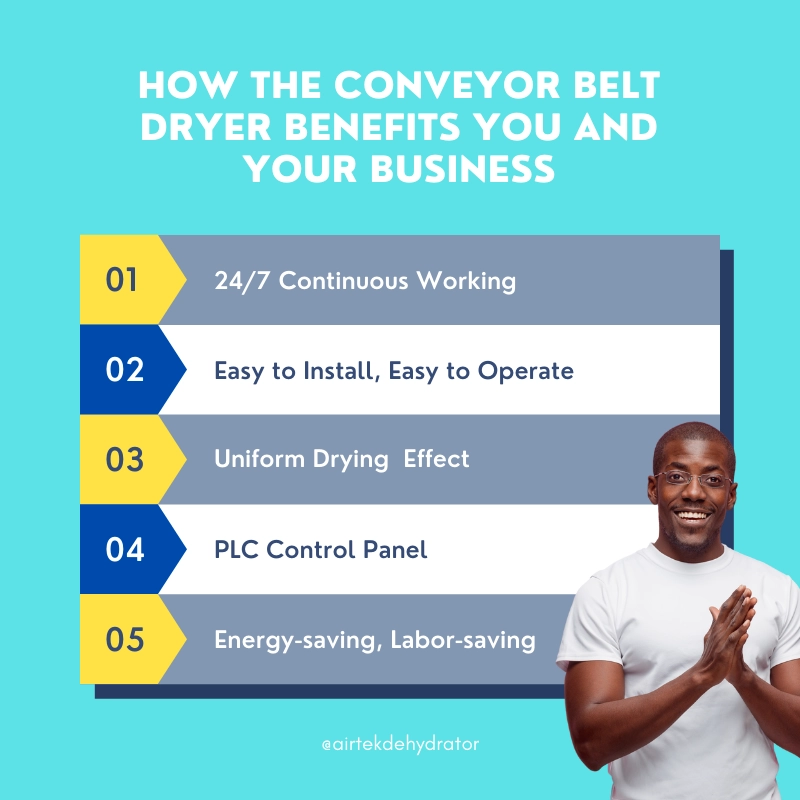
≡ Continuous Automatic Working
≡ Modulars Assembly, Easy to Install
A conveyor belt dryer and a mesh belt dryer are the same class of continuous drying machine: product travels on a belt (typically stainless mesh) through a heated, ventilated tunnel instead of sitting in a closed chamber for a complete batch. Airtek manufactures conveyor belt dryer machines that can be adapted to different food materials, moisture ranges, and line layouts.
This page is for plant buyers comparing continuous mesh-belt drying with batch cabinet or trolley systems. If your product form and wet flow are still changing from day to day, start with the batch options on Drying Solutions or read Batch vs continuous heat pump dryer.
What a mesh belt / conveyor belt dryer does
- Large processing capacity on a steady product stream
- Continuous automatic working for long production hours
- Modular assembly, so tunnel length and layout can be discussed against your residence time and hall
The continuous conveyor belt dryer is a factory-built drying system with a PLC control panel. Belt speed, temperature, and air volume are set so moisture can be removed evenly as product moves through the tunnel. The dryer’s length corresponds to the time needed to evaporate the water load you actually have—not to a brochure name alone.
Food-contact designs use stainless steel contact parts and should be specified for access and cleaning. Multi-pass machines stack conveyor beds over each other to increase belt area in a smaller footprint. Configurations—including insulation, tunnel height and length, and the heat-pump arrangement—are selected against the product and the site.
Continuous mesh-belt drying vs batch drying
| Architecture | How product moves | Typical fit |
|---|---|---|
| Cabinet or multi-trolley batch | A full chamber load is dried, then unloaded | Mixed SKUs, seasonal peaks, trials, flexible recipes |
| Conveyor / mesh belt (continuous) | Product feeds and discharges while the line runs | Stable, relatively uniform pieces and a steady wet flow for many hours |
Lean continuous when logistics can feed a belt and the same profile runs long enough to justify the line. Lean batch when changeovers, smaller lots, or many products dominate. Many plants run a hybrid. There is no universal rule that a given tonnage must go on a belt; plant constraints decide.
For compact batch chambers see the cabinet food dryer. For trolley rooms see batch tray heat pump dryers and heat pump food dryer machines. For selection dimensions, see How to Choose a Commercial Food Dehydrator Machine.
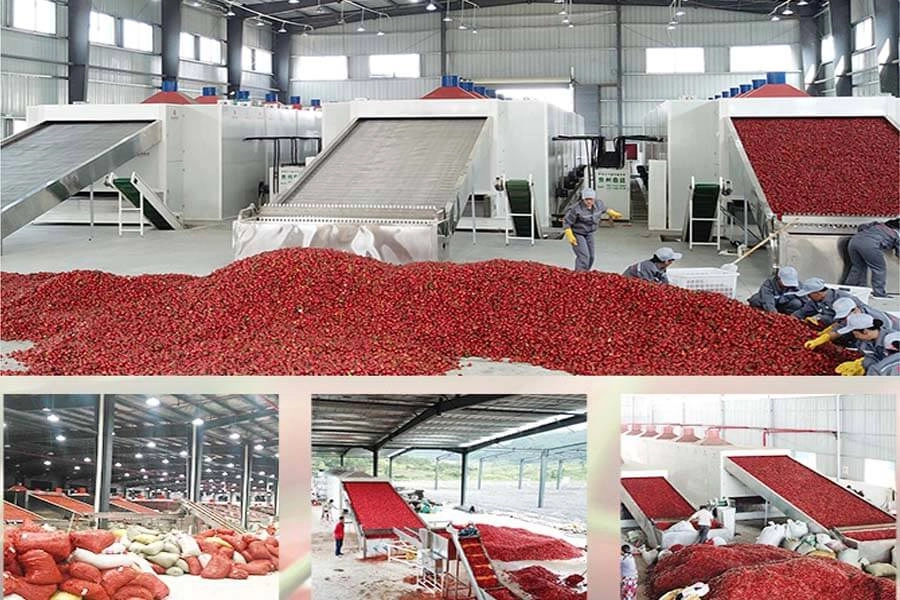
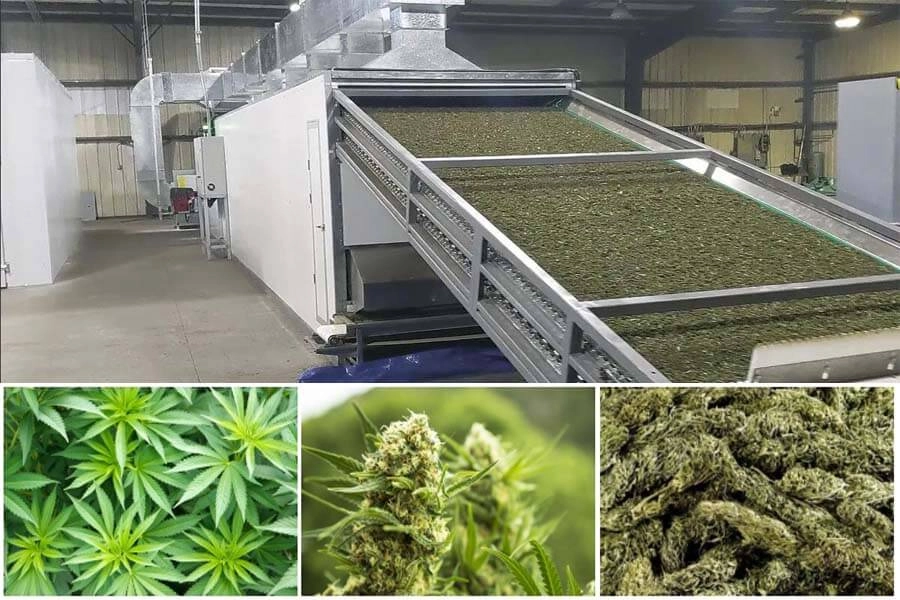
Airtek conveyor dryers are commonly applied to food, vegetables, and other agricultural materials. Other industrial uses can be discussed on inquiry against the actual material and hygiene requirement.

Success Cases

FAQ
How do I choose between a cabinet, a batch trolley room, and a mesh belt dryer?
Start with wet infeed, product geometry, hours available, and how often you change products. Smaller cabinet machines often suit trials and limited daily weight. Multi-trolley batch rooms suit commercial lots that still run as complete charges. A conveyor / mesh-belt dryer suits continuous 24-hour style operation when the product can be fed in a steady stream. Treat any catalog capacity band as a navigation aid and size the line from your water load and residence time.
What heat source does a conveyor belt dryer use?
Airtek typically discusses air-energy heat-pump systems first for food drying. Other heat sources are sometimes considered against site utilities. Share your available power and any fuel constraints on inquiry.
Can the machine be customized?
Yes. Belt width and length, number of passes, temperature program, and infeed/discharge layout are specified against your material, target moisture, and hall. Send those details through the inquiry form.